For years, ad tracking meant a pixel: a snippet in the visitor's browser that fired when a page loaded. That still works, but less reliably. Server-side tracking is how advertisers close the gap.
What Is Server-Side Tracking?
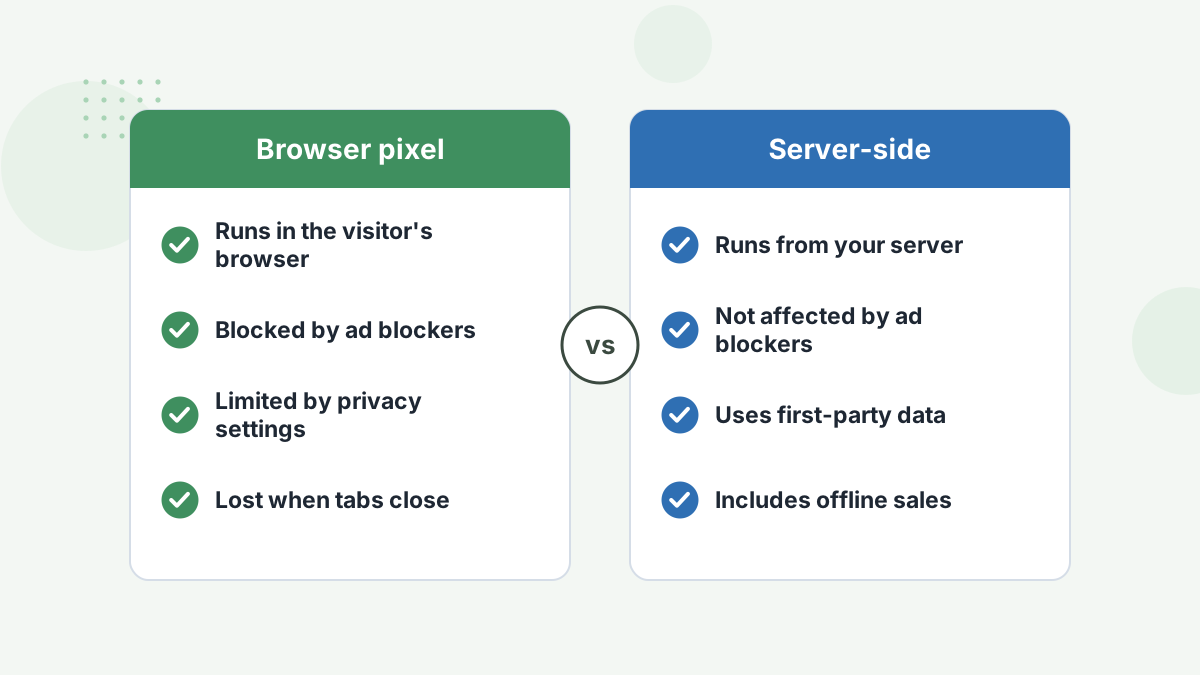
Server-side tracking sends conversion data from a server you control, such as your checkout, payment processor, CRM or a tagging server, directly to analytics and ad platforms. The visitor's browser isn't the messenger.
What this means for you: a purchase still gets recorded even if the buyer uses an ad blocker, has strict privacy settings, or closes the tab before the thank-you page loads.
Why Browser Pixels Lose Data
- Ad blockers stop pixel scripts from loading.
- Privacy features in browsers and iOS limit cookies and tracking. See iOS tracking changes.
- Consent choices can prevent tags from firing. See cookie consent and tracking.
- Offline sales on calls or by invoice never touch a browser.
- Device switching breaks cookie-based journeys.
Types of Server-Side Tracking
| Approach | What It Does | Examples |
|---|---|---|
| Platform conversion APIs | Send events directly to an ad platform | Meta CAPI, TikTok Events API |
| Enhanced or offline conversions | Match hashed customer data or import offline sales | Google enhanced conversions, offline imports |
| Server-side tagging | Route events through your own tagging server | Server-side Google Tag Manager, pipelines like Elevar |
| Server-side attribution platforms | Match conversions to journeys and attribute independently | Hyros and similar tools |
First-Party Data and Matching
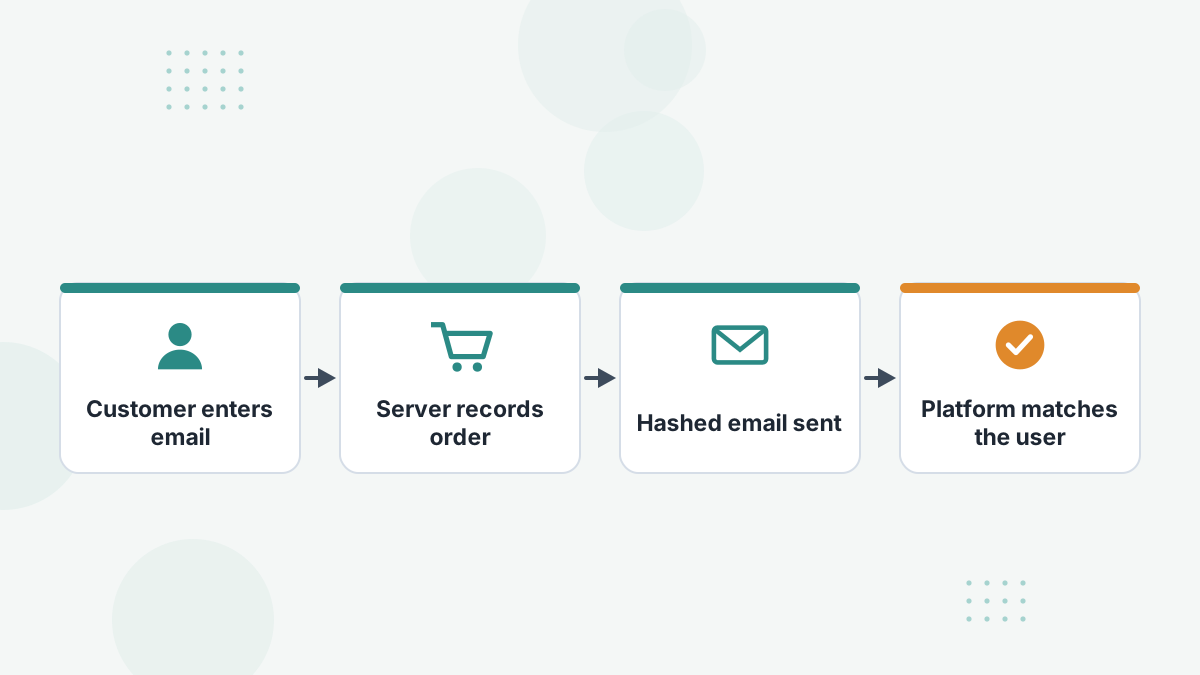
Server-side events are only useful if the platform can connect them to a person who saw an ad. That's done with first-party data you collect, such as email and phone, hashed before sending, plus click IDs where available.
The more identifiers you send (with proper consent), the higher the match rate. Meta calls this event match quality; Google uses enhanced conversions.
Server-Side Tracking vs Server-Side Attribution
There's an important distinction. Sending events server-side to Meta makes Meta's own reports more complete, but Meta still credits itself with its own rules. Each platform still claims any sale it touched.
A server-side attribution platform goes further: it matches every conversion to the full journey across all platforms and credits each sale once. That's what Hyros does, and why some brands use both a pipeline and an attribution tool. See Hyros vs Elevar.
Setting Up Server-Side Tracking
- Keep your pixels and add server-side events alongside them.
- Deduplicate with shared event IDs so platforms don't count sales twice.
- Send identifiers like hashed email and phone where you have consent.
- Use one source per event, so two tools don't both send the same purchase.
- Monitor match quality in each platform's events tools.
Limits of Server-Side Tracking
Server-side tracking doesn't override consent: you still need a lawful basis for the data you send. It also can't see influence that left no trace, like a podcast mention. And without deduplication, it can make numbers worse, not better.
Server-Side Tracking FAQs
Do you still need the pixel?
Yes. Most platforms recommend running the pixel and server-side events together with deduplication.
Is server-side tracking GDPR compliant?
It can be, but compliance depends on consent, disclosure and your implementation.
Does server-side tracking fix iOS issues?
It recovers many lost conversions, though some cross-app tracking limits remain.
What's the easiest way to start?
Use your store's native Conversions API integration, or a tool that handles server-side events for you.
Recover the Sales Your Pixels Miss
Book a Hyros demo to see server-side attribution on your funnel.
Book a Hyros Demo