Meta recommends running the Conversions API alongside the pixel. The pixel catches browser events; CAPI catches what the browser misses and adds richer customer data. Together, they give Meta a fuller picture.
What the Conversions API Does
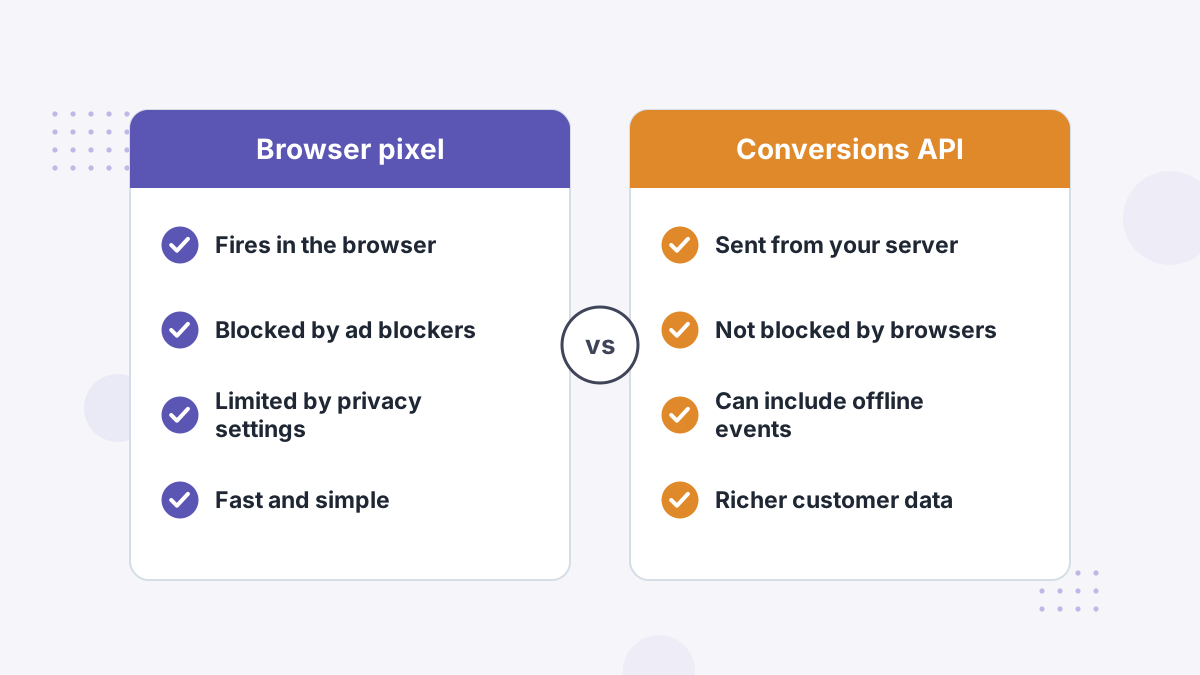
CAPI is a server-to-server connection between your systems and Meta. When a purchase, lead or other event happens, your server (or a partner integration) sends it to Meta with details such as event name, time, value and hashed customer identifiers.
What this means for you: conversions blocked by ad blockers or privacy settings can still reach Meta, and events that never touch a browser, like a call close, can be sent too.
Ways to Set Up CAPI
| Option | Best For | Effort |
|---|---|---|
| Partner integration | Shopify, WooCommerce and other platforms with native Meta apps | Low |
| Conversions API Gateway | Teams wanting a managed server option | Medium |
| Server-side tag manager | Sites already using server-side tagging | Medium |
| Direct API integration | Custom systems and developers | High |
| Attribution tool | Sending matched sales, calls and closes | Low to medium |
Deduplication: The Step People Miss
If the pixel and CAPI both send the same purchase, Meta needs to know it's one event. You do that by sending the same event name and event ID from both.
Without it, conversions are double counted, ROAS looks inflated and optimization suffers. Check deduplication in Events Manager after setup. See pixel troubleshooting.
Event Match Quality
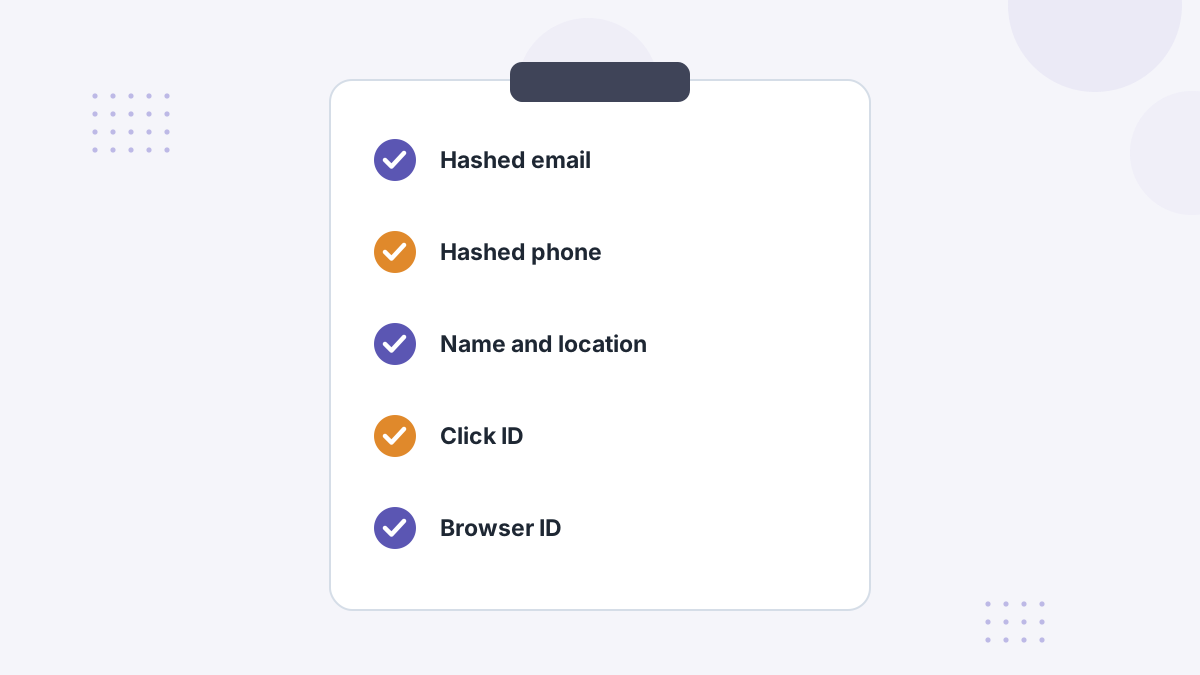
Meta scores how well server events can be matched to users. Sending more identifiers, such as hashed email, phone, name, city and click and browser IDs where available, improves the score.
Collect these with consent and send what you legitimately have. Better matching means more conversions attributed and better optimization.
Sending Offline and Deeper Events
CAPI isn't just for website purchases. You can send events like qualified leads, booked calls and closed deals that happen in your CRM. Optimizing on deeper events helps Meta find people who actually buy.
Attribution tools such as Hyros use CAPI to send matched sales, including calls and offline closes. See Hyros AI ad optimization.
Common Mistakes
- No deduplication between pixel and server events.
- Two tools both sending purchases via CAPI.
- Missing value and currency on purchases.
- Sending events without a lawful basis or consent.
- Optimizing on shallow events when deeper ones have enough volume.
Facebook Conversions API FAQs
Do you need the pixel if you use CAPI?
Meta recommends using both, with deduplication.
Is the Conversions API free?
Meta doesn't charge for CAPI; costs come from hosting or tools you use to send events.
Can CAPI send offline conversions?
Yes, events from your CRM or sales process can be sent server-side.
Does CAPI fix attribution?
It improves Meta's data, but Meta still applies its own attribution rules.
Give Meta the Sales Its Pixel Misses
Book a Hyros demo to see matched conversions sent to Meta through the Conversions API.
Book a Hyros Demo