Our Verdict
Choose Hyros if you run ads across several platforms, sell through funnels, webinars or sales calls, or have meaningful revenue outside Shopify. Its server-side matching and call attribution are built for exactly those journeys.
Choose Triple Whale if you're a Shopify-only DTC brand that wants attribution bundled with store dashboards, profit views, post-purchase surveys and an AI analyst, and you'd like a free starting point.
These two tools come up in the same breath constantly, but they're built for different jobs. Comparing them feature by feature can be misleading unless you start with that difference.
The Core Difference Between Hyros and Triple Whale
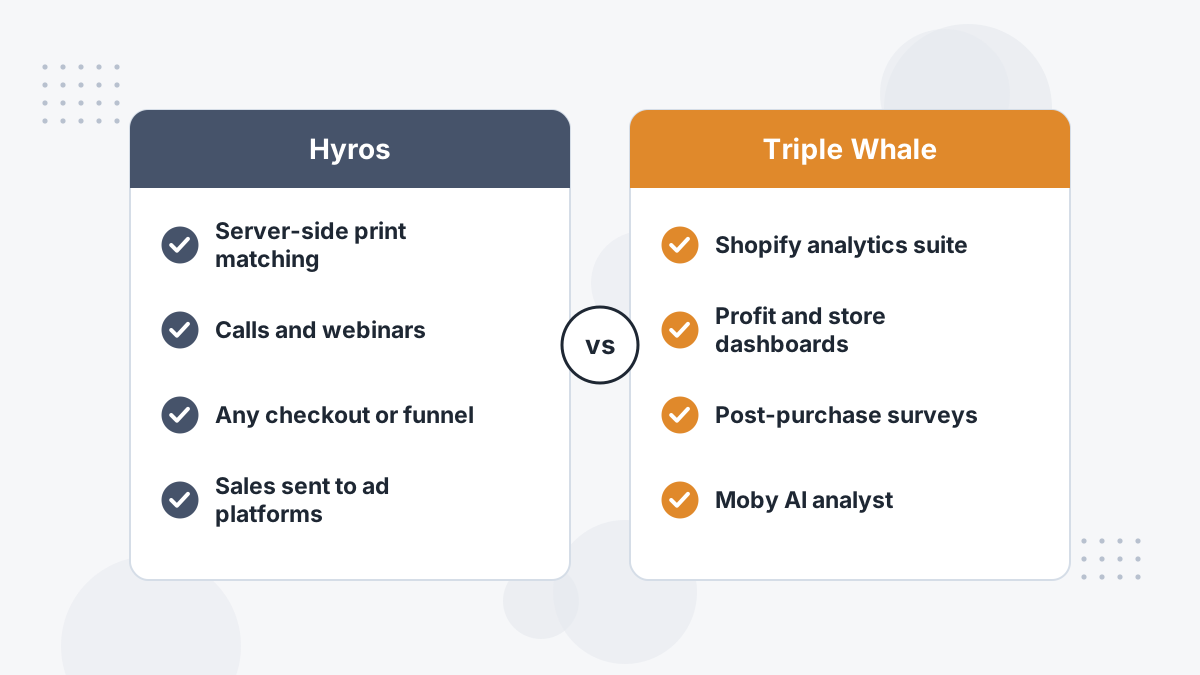
Hyros goes deep on one thing: tracking. It matches every sale, call and sign-up to its true source, then sends that data back to your ad platforms. It works with Shopify, but equally with ClickFunnels, Kajabi, Stripe, GoHighLevel and CRM-driven funnels.
Triple Whale goes broad around Shopify. Attribution is one part of a larger ecommerce suite that includes dashboards, customer segments, profit metrics, post-purchase surveys and its Moby AI agents.
What this means for you: if the question keeping you up is "which ads actually produce revenue across a complicated journey", Hyros is the specialist. If your main problem is "give the Shopify team one place to run the business", Triple Whale is designed for that.
Hyros vs Triple Whale Side by Side
| Area | Hyros | Triple Whale |
|---|---|---|
| Primary focus | Tracking and attribution | Shopify analytics suite |
| Tracking method | Server-side print tracking | Triple Pixel (first-party, server-side) |
| Best platform fit | Any funnel, cart or CRM | Shopify first |
| Sales call attribution | Yes, down to rep close rates | Not a core focus |
| Post-purchase surveys | Not native | Native |
| Media mix modeling | Not native | Enterprise tier (Compass) |
| AI assistant | Account AI analyst, Claude MCP | Moby chat and agents |
| Free option | No; demo plus guarantee | Free plan available |
| Pricing basis | Tracked monthly revenue | Annual GMV plus package |
| Support | Setup team and analyst on every plan | Dedicated success on Enterprise |
Tracking Method
Both tools moved beyond the old browser pixel, but they get there differently.
Hyros builds a "print" for each visitor from identifying data points and matches conversions to it server-side. Because it can tie identity through details like the email entered at opt-in, it's strong at following someone across devices and over long gaps.
Triple Whale uses its Triple Pixel, a first-party tracking pixel combined with Shopify's order data. For a store where most buyers click and check out within a session or two, that's very effective.
Why it matters to you: the longer and more cross-device your journey, the more Hyros's identity matching pays off. A same-day impulse purchase doesn't need it. Learn more in how Hyros works.
Attribution Models and Windows
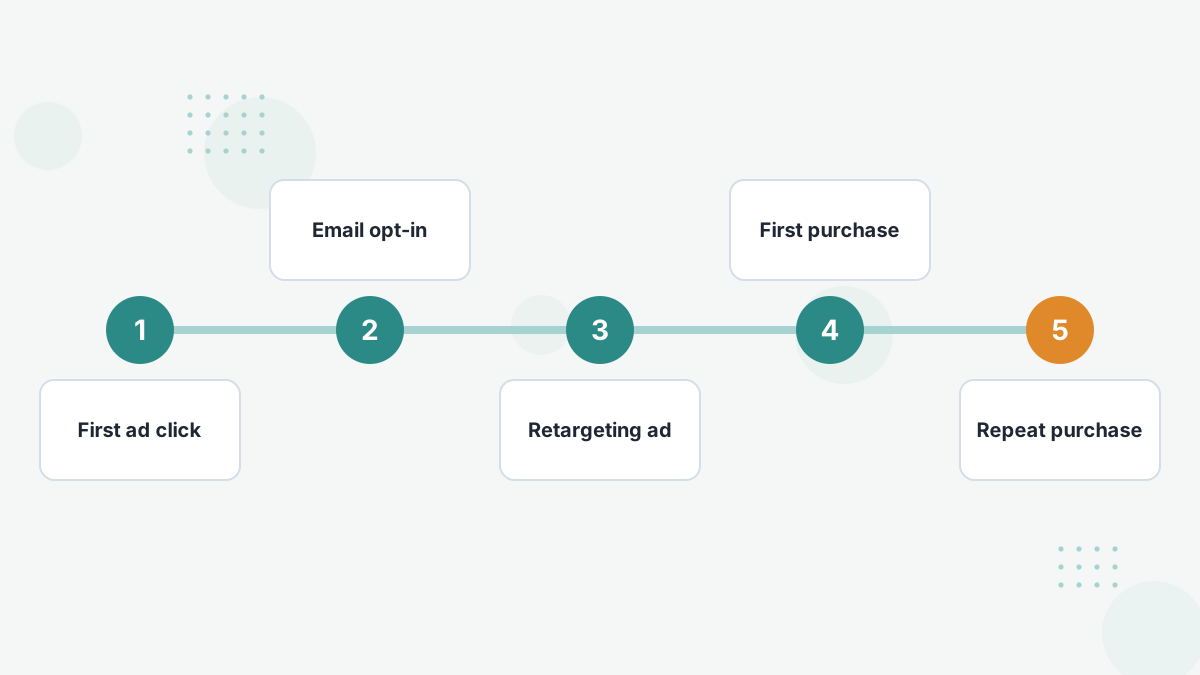
Both tools offer multi-touch attribution with several models. Triple Whale's free plan includes first- and last-click views, with multi-touch on its paid Foundation plan.
Hyros lets you weight first click, assists and last click, and supports long attribution windows. That's useful when a customer clicks an ad, joins your list, and buys 45 days later.
For a Shopify brand with a short buying cycle, both are capable. For an offer with a long consideration period, Hyros's configurable long windows are the safer choice. Our guide to attribution windows explains how much difference this makes.
Reporting and Analytics
This is where Triple Whale shines. Its paid plans include no-code dashboards, customer segments, custom metrics, a SQL editor and profit views. Moby, its AI analyst, answers questions and, on higher plans, can adjust budgets and pause ads within guardrails you set.
Hyros reporting is narrower but deep where it counts for ad decisions: revenue by source and ad, LTV by source, cohorts, call metrics and creative performance. Its account analyst and Claude MCP interface let you query your data in plain language.
Our read: if you want a business operating dashboard, Triple Whale gives you more. If you want to know precisely which ad and creative produced which revenue, Hyros gives you more confidence in that one answer.
Feeding Data Back to Ad Platforms
Hyros places heavy emphasis on sending its matched conversions back to Meta, Google and TikTok through their server-side channels. The goal is to give the platforms' algorithms a fuller picture of real buyers.
Triple Whale also activates first-party data, with its Sonar tools included on paid plans. Both recognize that better input data helps the ad platforms optimize.
The practical difference is coverage: because Hyros tracks calls, offline closes and non-Shopify checkouts, it can feed back conversions that a Shopify-centered tool never sees. See Hyros AI ad optimization for the mechanics.
Calls, Webinars and Non-Shopify Funnels
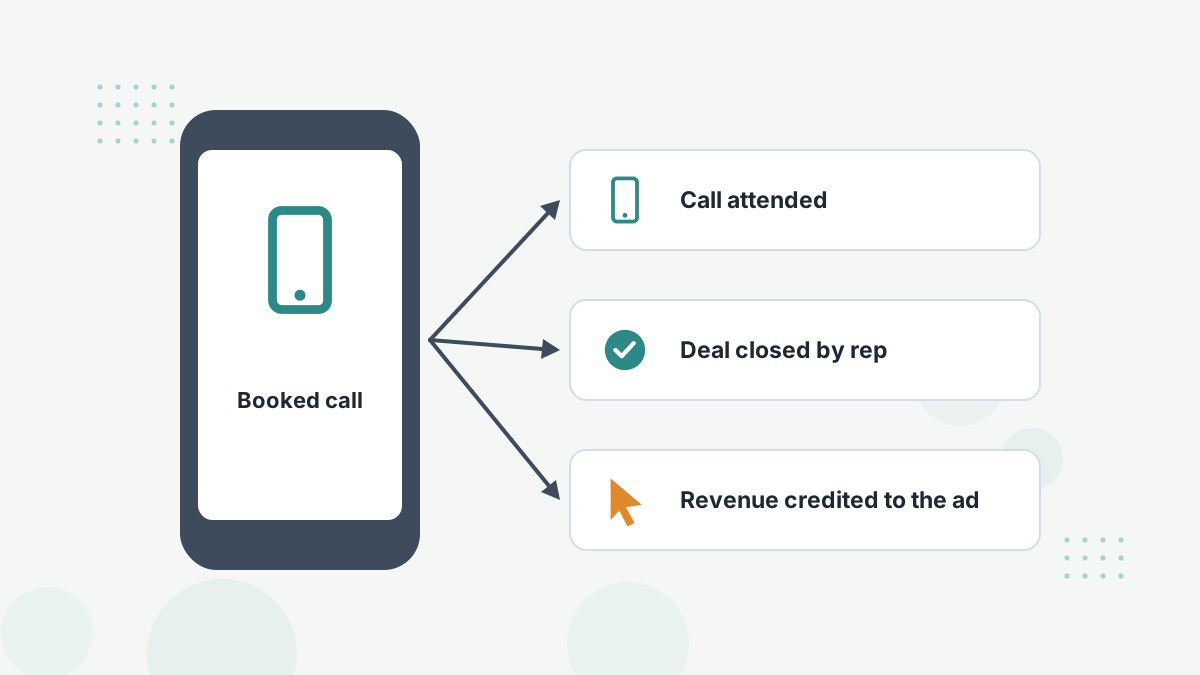
This is the clearest dividing line. Hyros tracks call bookings, show rates, call quality and offline closes, all tied back to the original ad. It integrates with schedulers like Calendly, CRMs like GoHighLevel and HubSpot, and course platforms like Kajabi.
Triple Whale isn't designed around a sales calendar. It's at its best when the Shopify order is the conversion.
So if any meaningful share of your revenue comes from calls, a webinar funnel, a separate subscription app or a high-ticket offer, Hyros is the better fit. Our Hyros call tracking page covers how it works.
Pricing Compared
Both tools price on revenue, but measure it differently.
| Hyros | Triple Whale | |
|---|---|---|
| What sets the price | Tracked monthly revenue | Annual GMV plus chosen package |
| Entry point | $69/month for up to $5,000 tracked monthly revenue (pricing page) | Free plan; paid plans by GMV |
| Features by tier | All features on every tier | Features split across Free, Foundation, Automate and Enterprise |
| Billing | Quoted on demo; annual and monthly options reported | 12-month subscriptions, billed monthly or annually |
Triple Whale's free plan makes it easy to start. Hyros's all-features approach means you never pay extra to unlock multi-touch attribution or support.
The fair comparison is at your own revenue level with the features you need. If you need multi-touch attribution and an analyst on Triple Whale, you're on a paid package; on Hyros, every tier includes both. See our full Hyros pricing breakdown.
Setup and Support
Triple Whale installs as a Shopify app, which makes setup quick for a single store. Hyros setup starts with a demo and is guided by its setup team, which takes longer on complex stacks but is included on every plan.
Hyros also includes an account analyst and weekly training on every tier. Triple Whale reserves dedicated success coverage for its Enterprise plan.
If you'd rather self-serve and you're Shopify-only, Triple Whale's onboarding is lighter. If you want guided help reading attribution data, Hyros's model gives you more of it from day one.
Integrations Compared
Integration coverage reflects each tool's focus. Triple Whale's most mature integration is Shopify, and it connects to the ad platforms, email and SMS tools, and subscription apps that DTC brands typically use.
Hyros integrates with the major ad networks plus a wide spread of non-Shopify tools: WooCommerce, Stripe, PayPal, ClickFunnels, Kajabi, GoHighLevel, Calendly, Klaviyo and HubSpot, with Zapier, Make, webhooks and an API for the rest.
Why it matters to you: list every tool a customer touches between ad and payment. If that list includes a scheduler, a course platform or a CRM, check it against our Hyros integrations overview.
Three Buyer Scenarios
To make the choice concrete, here's how we'd call it for three typical businesses.
A Skincare Brand on Shopify
Most sales happen within a day of the click, almost all on Shopify, mostly from Meta and Google. Triple Whale's dashboards and free starting point fit well. Hyros becomes the better pick once TikTok, YouTube and influencer spend make cross-channel de-duplication the main problem.
A Supplement Brand With Subscriptions
First orders come through Shopify, but profit depends on subscription renewals over months. Both tools report LTV; Hyros's long attribution windows and feedback to ad platforms help judge prospecting ads on long-term value.
A Brand That Also Sells a Coaching Program
Shopify handles merch, but the real revenue comes from a high-ticket program sold on calls. This is Hyros territory: it tracks the call funnel and the store in one place.
Which Should You Choose?
Shopify Store, One or Two Channels
Triple Whale is a strong default, especially if you value dashboards and want to start free.
Shopify Store, Heavy Multi-Platform Spend
Hyros, for a single trusted revenue view across Meta, Google and TikTok and stronger feedback to the platforms.
Coaching, Courses or High-Ticket
Hyros, clearly. Webinars, applications and calls are its home turf.
Agency With Mixed Clients
Hyros, because it covers ecommerce and non-ecommerce clients in one tool.
Still weighing Shopify tools? See our best attribution software for Shopify and the Hyros for Shopify guide.
Hyros vs Triple Whale FAQs
Is Hyros more accurate than Triple Whale?
For long, cross-device or call-based journeys, Hyros's identity matching is built to capture more. For quick Shopify purchases, both track well.
Is Triple Whale cheaper than Hyros?
Triple Whale has a free plan, so it's cheaper to start. At paid levels, the comparison depends on your revenue and which Triple Whale package you need.
Can you use Hyros and Triple Whale together?
Some brands do, using Triple Whale for store dashboards and Hyros for attribution. Make sure only one tool sends conversions to each ad platform to avoid double counting.
Does Hyros work with Shopify?
Yes. Shopify is a native integration, alongside WooCommerce, Stripe and many funnel tools.
See How Hyros Compares on Your Store
A demo shows Hyros's attribution on your own funnel so you can compare it with what Triple Whale or Ads Manager reports.
Book a Hyros Demo