iOS privacy updates are among the most talked-about causes of bad ad data, and also among the most misunderstood. Some headlines overstate what Apple changed; others understate how much it adds up. Here's a measured view.
App Tracking Transparency (iOS 14.5)
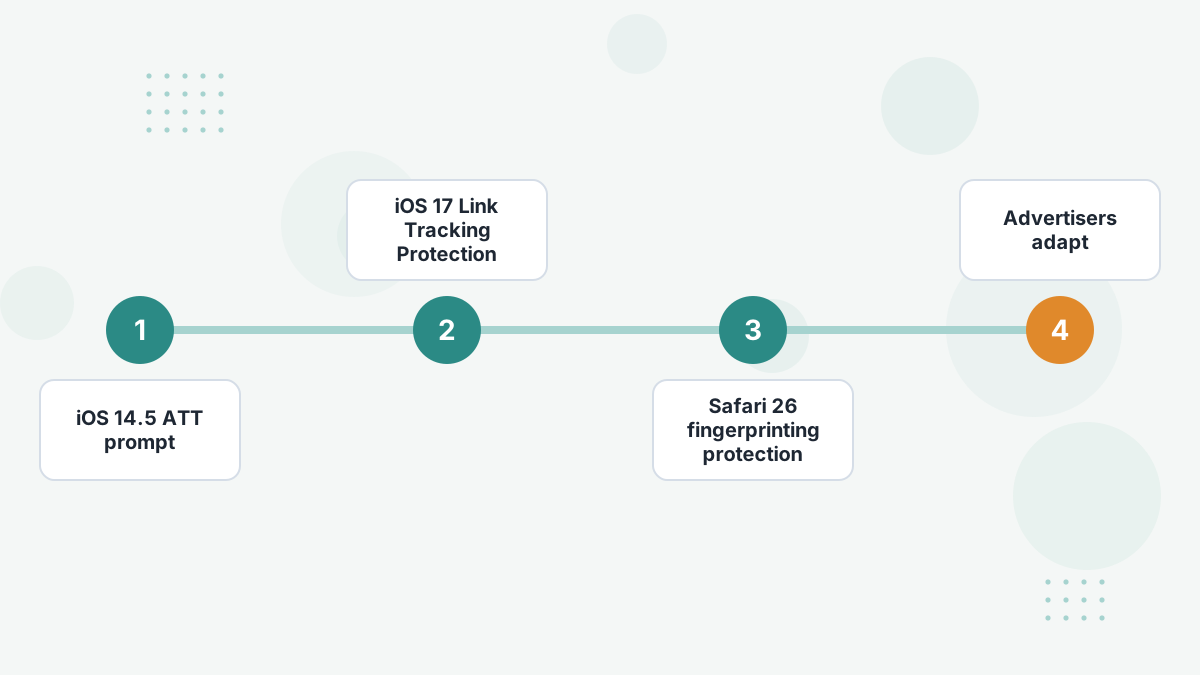
With iOS 14.5 in 2021, Apple introduced App Tracking Transparency (ATT). Apps must ask permission before tracking users across other companies' apps and websites, and many users decline.
The impact on advertisers was immediate. Meta and other platforms lost visibility of many conversions from iPhone users who'd opted out. Platforms responded with aggregated, modeled reporting, and attribution windows shrank: Meta's longer view-through windows were removed over time, with the last 7-day and 28-day view windows dropping from its Ads Insights API in January 2026.
Link Tracking Protection (iOS 17)
In 2023, Apple added Link Tracking Protection, which removes known tracking parameters such as click IDs from links. By default it applies to links shared in Mail and Messages and to Safari Private Browsing.
Why it matters: when click IDs like gclid or fbclid are stripped, platforms find it harder to tie a visit back to an ad click. UTM parameters are generally left alone.
iOS 26 and Safari 26
With iOS 26 in 2025, Apple made Advanced Fingerprinting Protection the default across all Safari browsing, limiting scripts' ability to identify devices by their characteristics.
Many headlines claimed iOS 26 strips click IDs from all browsing by default. Independent testing reported that, in regular browsing, gclid is not stripped by default; full parameter stripping in normal tabs happens when users turn on Advanced Tracking and Fingerprinting Protection for all browsing. Treat the risk as real but partial, and expect Apple to keep tightening.
What These Changes Mean for You
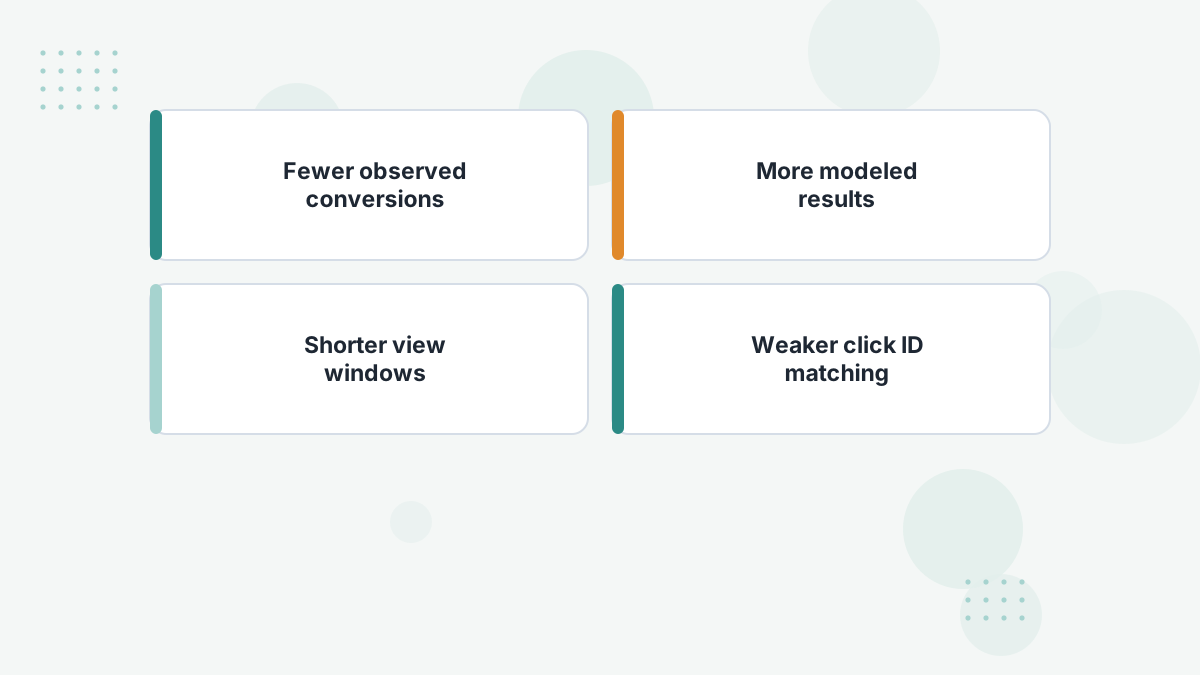
- Platforms see fewer conversions directly and rely more on modeling.
- Click-ID-based matching is less reliable on Apple devices.
- Fingerprinting-based tracking is getting harder, so tools relying on it lose accuracy.
- First-party identifiers matter more: emails and phone numbers you collect with consent.
How Advertisers Adapt
- Add server-side events through each platform's conversion API. See server-side tracking.
- Capture identity early with opt-ins, so journeys can be matched by email rather than cookies.
- Keep UTMs on every link, since they're generally preserved.
- Send hashed customer data via Meta CAPI and Google enhanced conversions, with consent.
- Use an independent attribution tool that matches by first-party identity across devices.
What Not to Do
- Don't rely on fingerprinting workarounds. Apple is actively closing them.
- Don't assume every drop in reported conversions is real. Check against actual revenue.
- Don't ignore consent. Better tracking still needs a lawful basis.
iOS Tracking FAQs
What did iOS 14.5 change for advertisers?
It introduced App Tracking Transparency, requiring opt-in for cross-app tracking, which reduced platforms' visibility of conversions.
Does iOS 26 remove gclid and fbclid?
By default, Link Tracking Protection strips them in Mail, Messages and Private Browsing. Testing reported regular browsing keeps gclid unless users enable stricter settings.
Are UTM parameters affected?
UTM parameters are generally preserved by Link Tracking Protection.
What's the best fix?
Server-side events plus first-party identity matching.
Measure Accurately Despite Privacy Changes
Book a Hyros demo to see identity-based attribution that doesn't depend on browser cookies.
Book a Hyros Demo