This guide explains how consent interacts with ad measurement. It isn't legal advice; privacy rules vary by country and situation, so check your obligations with a qualified adviser.
How Consent Affects Ad Tracking
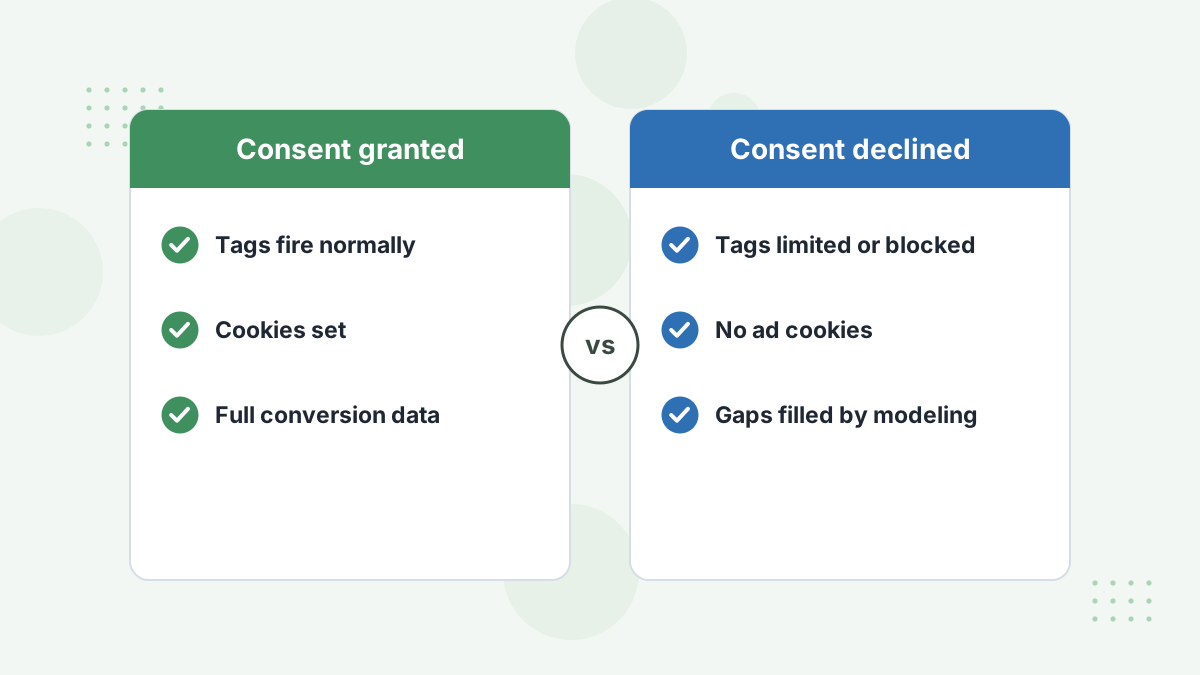
In regions like the EU and UK, many sites must get consent before setting non-essential cookies, including most advertising and analytics cookies. When visitors decline, those tags either don't fire or run in a limited mode.
What this means for you: a share of visits and conversions disappears from platform reports. The share depends on your audience, banner design and region.
Google Consent Mode v2
Google's Consent Mode lets Google tags adjust their behavior based on consent. Version 2 uses four signals: ad_storage, ad_user_data, ad_personalization and analytics_storage.
When consent is denied, tags can send limited, cookieless signals, and Google uses modeling to estimate conversions. Consent Mode v2 is widely treated as required for EEA traffic if you want Google's measurement and audience features to work. Enhanced conversions in the EEA also depend on users granting consent for ad user data and personalization.
Modeled Conversions
Both Google and Meta fill consent and privacy gaps with modeled conversions: statistical estimates of conversions they couldn't observe. Modeling helps aggregate numbers look realistic, but it's still an estimate, especially at campaign and ad level.
Compare platform totals against real revenue to see how well modeling matches reality for your business.
Server-Side Tracking and Consent
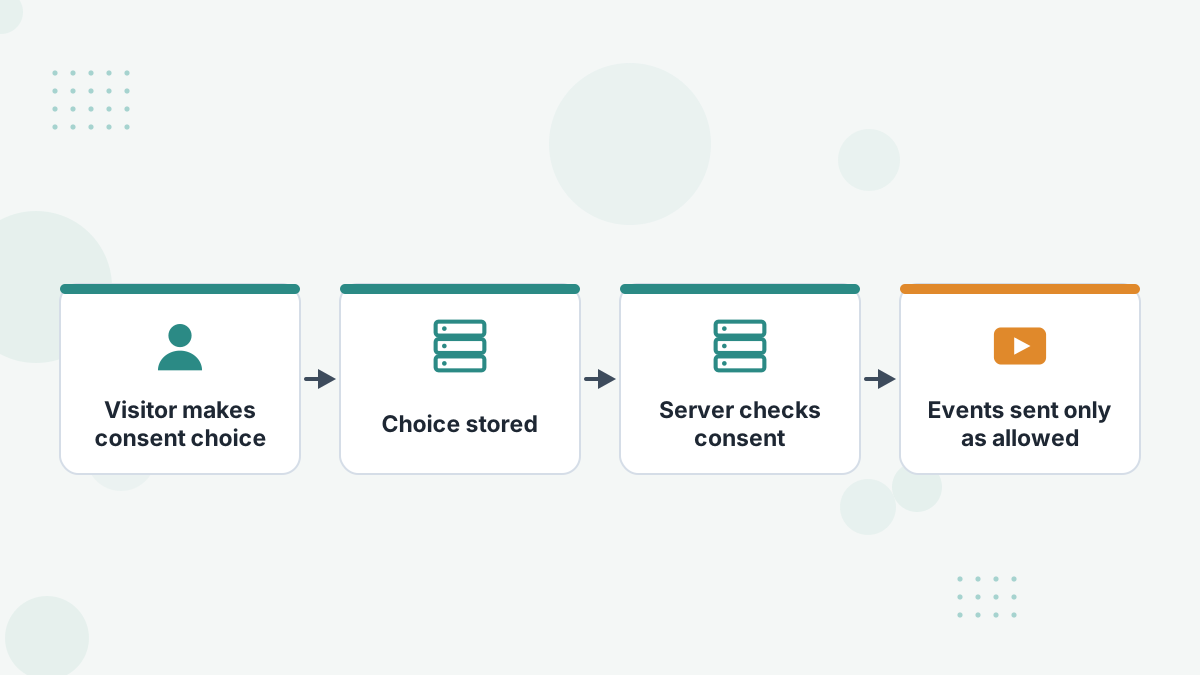
Server-side tracking is more reliable than pixels, but it doesn't remove the need for consent. Data you send from your server must still have a lawful basis, and your server should respect the visitor's choices.
Done properly, server-side setups improve accuracy for consenting users and keep you on the right side of the rules. See server-side tracking.
A Practical Setup Checklist
- Use a consent management platform that loads before your tags.
- Implement Consent Mode v2 correctly for Google tags.
- Map each tag to a consent category and respect choices server-side too.
- Explain tracking in your privacy policy in plain language.
- Collect first-party data transparently, like emails at opt-in, with clear purposes.
- Monitor consent rates and how they affect reported conversions.
Where Attribution Tools Fit
Attribution tools that rely on first-party data you collect directly, such as an email entered at opt-in and sales from your own checkout, can give a more complete picture of your own funnel. Hyros says its approach is designed to work within GDPR, CCPA and CPRA, and that compliance depends on your implementation and consent flows. See how Hyros works.
Cookie Consent FAQs
What is Consent Mode v2?
Google's framework for adjusting tag behavior to consent, using ad_storage, ad_user_data, ad_personalization and analytics_storage signals.
Does server-side tracking bypass consent?
No. It should respect the same consent choices.
Why did conversions drop after adding a banner?
Declined visitors aren't tracked by cookie-based tags, so reported conversions fall even if sales don't.
Are modeled conversions accurate?
They're estimates that can be reasonable in aggregate but less reliable for individual ads.
Measure Your Funnel With First-Party Data
Book a Hyros demo to see attribution built on the data your funnel collects.
Book a Hyros Demo