Hyros
Server-side print tracking, call attribution and sales sent back to your ad platforms. One all-inclusive plan priced by tracked revenue.
Book a Hyros DemoTriple Whale
Attribution bundled with store analytics, profit views and an AI analyst. Free plan to start; paid plans scale with GMV.
Compare With HyrosNorthbeam
Multi-touch attribution plus media mix modeling for brands spending heavily across many channels. Reported entry around $1,500 a month.
Compare With HyrosAd tracking software sits between your ads and your revenue, matching sales to the clicks, emails and calls that produced them. The best tools do it independently of the ad platforms, so you get one honest view instead of five self-reported ones.
No single tool is best for everyone. A coach with a webinar funnel, a Shopify brand and an affiliate media buyer need different things, so we've ranked by the job each tool does best.
What Ad Tracking Software Actually Does
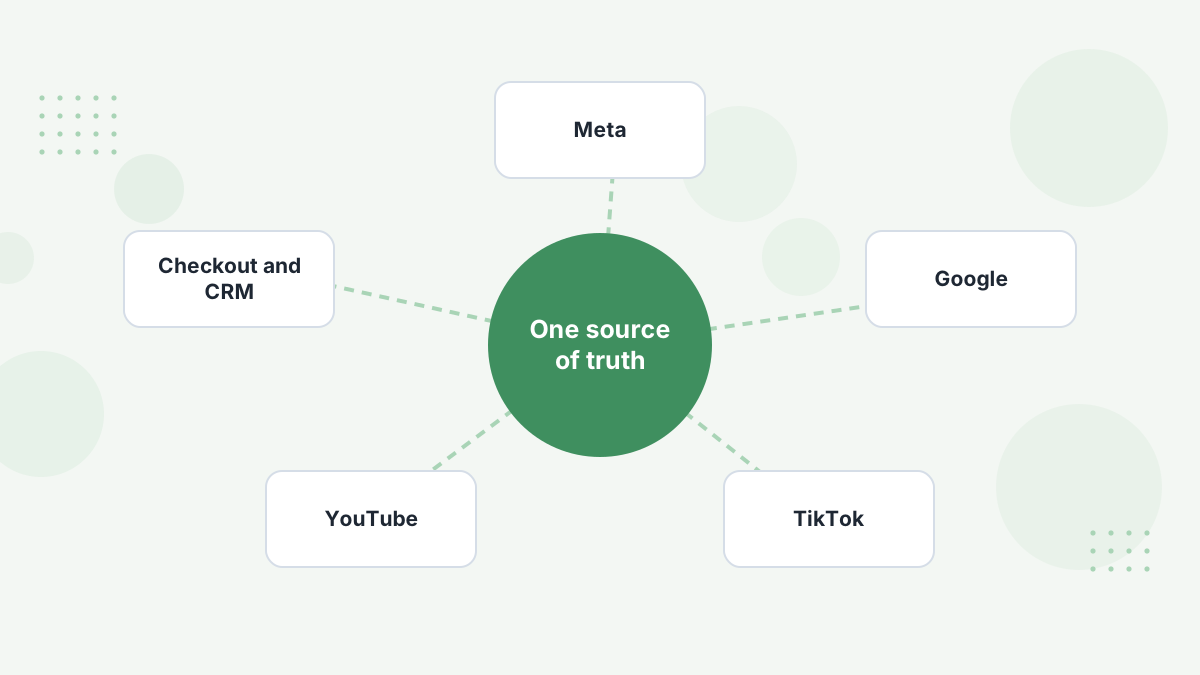
At its core, ad tracking software records where each visitor came from, follows them through your funnel, and credits the sale to the right source. Better tools add three things on top.
- Server-side tracking, which survives ad blockers, iOS privacy settings and cookie limits far better than a browser pixel.
- Multi-touch attribution, so you can see which ads start journeys as well as which ones close them.
- Conversion feedback, sending real sales back to Meta, Google and TikTok so their algorithms optimize on actual revenue.
Why it matters to you: when platform reporting overstates one channel and understates another, you scale the wrong ads. An independent tracker is how you avoid that. Our ad attribution guide explains the basics.
Pixel vs Server-Side Tracking: Why It Decides Accuracy
The single biggest difference between these tools is where they record a conversion. That choice decides how much of your revenue they can see.
| Method | How It Works | Where It Breaks |
|---|---|---|
| Browser pixel | A script in the visitor's browser fires when a page loads | Ad blockers, iOS opt-outs, cookie limits, device switching |
| First-party pixel | A pixel on your own domain, often paired with store data | Still browser-based, so device switching and long gaps remain hard |
| Server-side matching | Your server or checkout reports the sale, matched to an identity such as email | Needs careful setup so every conversion source is connected |
What this means for you: if most buyers click and purchase within one browser session, a good first-party pixel catches most of it. If buyers opt in, leave, come back on another device or buy after a call, only identity-based server-side matching keeps the chain intact.
That's why we weight tracking method so heavily below. A lower price doesn't help if the tool can't see the sales that matter most to your business. Our server-side tracking guide goes deeper.
How We Ranked These Tools
We compared each tool on five things that decide whether it's right for you:
- Tracking method: browser pixel, first-party pixel or server-side matching.
- Journey coverage: can it see calls, webinars, subscriptions and offline closes?
- Channel coverage: how many ad platforms and tools it connects to.
- Pricing model: what drives the bill, and whether features are split across plans.
- Fit: the business model it's genuinely built for.
We don't assign star ratings or scores. Each tool gets a clear "best for" label instead, because the right answer depends on your funnel.
Ad Tracking Software Comparison Table
| Tool | Best For | Tracking Approach | Pricing Model |
|---|---|---|---|
| Hyros | Funnels, calls, multi-channel spend | Server-side print matching | Tracked revenue tiers, all features |
| Triple Whale | Shopify brands | First-party Triple Pixel | Free plan; paid by GMV and package |
| Northbeam | Large DTC budgets | First-party pixel plus modeling | Reported from about $1,500/month |
| Cometly | B2B SaaS and paid-social teams | Server-side with conversion sync | Usage-based on pageviews |
| Wicked Reports | Subscription and LTV focus | Server-side, CRM-linked | Reported from about $499/month |
| RedTrack | Affiliates and media buyers | Postbacks and S2S | Published plans, free ecommerce tier |
| ClickMagick | Funnel marketers on a budget | Link and first-party tracking | From $79/month (Starter) |
| AnyTrack | Lead gen and affiliate sites | Pixel plus conversion API sync | Free plan; paid from $100/month |
| SegMetrics | Course creators, email-driven | Email and cart integration | From about $57/month, by contacts |
| Google Analytics 4 | Free baseline | Browser tag | Free |
Rival prices are as published or reported in 2026 and change often, so confirm with each vendor.
1. Hyros: Best for Funnels, Calls and Multi-Channel Spend
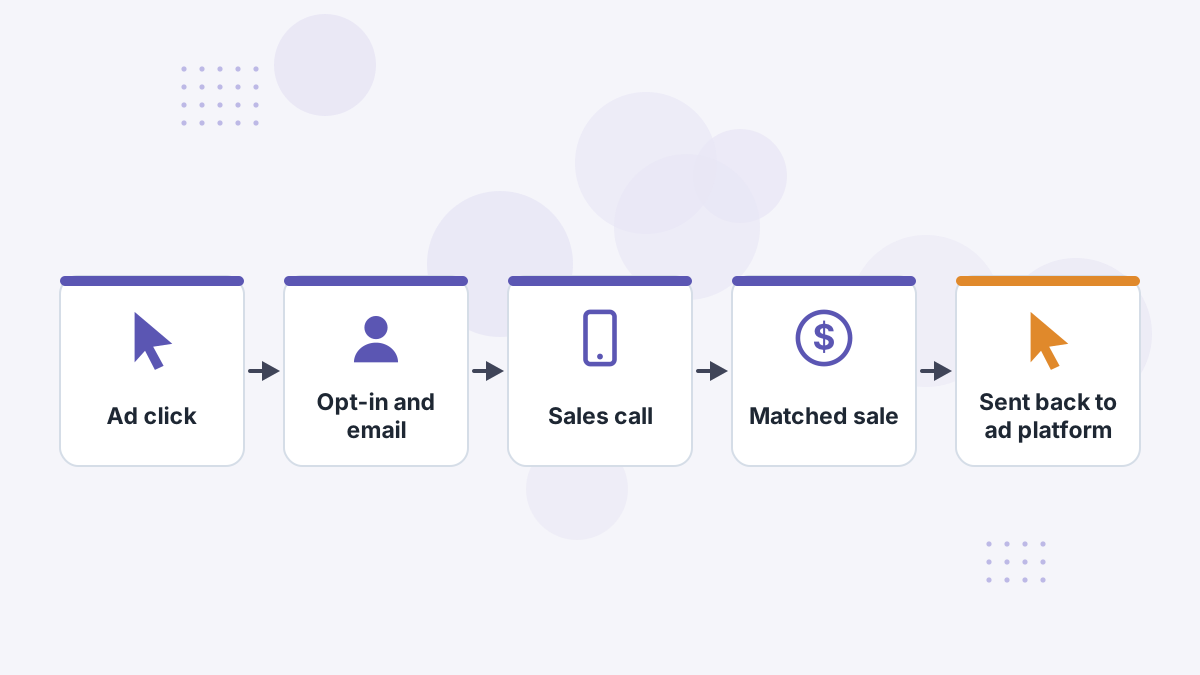
Hyros is our top pick for most businesses with a multi-step journey. Its print tracking matches sales to their true source server-side, using first-party identifiers like the email a lead enters, so it keeps the thread across devices and long gaps.
Two features set it apart. It tracks sales calls from booking to show-up to close. And it sends matched conversions back to Meta, Google and TikTok, so the platforms optimize on real buyers.
Pricing is one plan with everything included, priced by tracked monthly revenue. The pricing page lists $69 a month for up to $5,000 in tracked monthly revenue, with larger tiers quoted on a demo.
Why We Rank It First
- Cross-device server-side matching
- Call and offline-close attribution
- All features, setup team and analyst on every tier
- Works with any cart, funnel builder or CRM
Keep in Mind
- Demo required before buying
- Cost rises with tracked revenue
- Complex funnels take time to set up
Who it suits best: coaches and course creators with webinar or application funnels, B2B and service businesses with sales teams, Shopify brands spending across several networks, and agencies that need one tool across very different clients.
Who should wait: a small store spending modestly on one channel with instant checkout. You'll get more value from Hyros once your journey or spend grows. Read our full Hyros review or see Hyros pricing.
2. Triple Whale: Best for Shopify Brands
Triple Whale is the natural shortlist for Shopify-only DTC brands. Its first-party Triple Pixel combines with Shopify order data, and attribution sits inside a broader suite of dashboards, profit metrics, post-purchase surveys and the Moby AI analyst.
A free plan gives first- and last-click attribution; multi-touch and deeper analytics sit on paid packages priced by annual GMV.
Its biggest strength is breadth for store operators. Teams that want blended metrics, customer segments and a SQL editor in the same place as attribution will find a lot to like, and the Moby AI analyst can answer questions or, on higher plans, act on budgets within guardrails.
The trade-off is that features are split across plans, and the product is centered on the Shopify order. Pick Hyros instead if you sell outside Shopify, close sales on calls or need deeper cross-device matching. See Hyros vs Triple Whale.
3. Northbeam: Best for Large DTC Budgets
Northbeam pairs multi-touch attribution with media mix modeling, estimating the impact of channels a click tracker struggles with, such as upper-funnel video. It's aimed at brands spending heavily each month, with a reported entry price around $1,500 a month.
Modeling is useful because click tracking undercounts channels people rarely click, like YouTube or connected TV. Northbeam estimates their contribution so you don't starve them of budget. That benefit grows with the number of channels and the size of spend.
For a big ecommerce brand with a data-minded team, that modeling adds perspective. For smaller budgets or call-based funnels, it's more than you need, and the entry price reflects its enterprise focus. Compare in Hyros vs Northbeam and read our explainer on MMM vs multi-touch attribution.
4. Cometly: Best for B2B SaaS and Paid-Social Teams
Cometly focuses on server-side tracking and conversion sync, with AI-driven recommendations. It's popular with media buyers whose spend is concentrated on Meta and who want fast feedback inside that workflow.
The appeal is speed: conversions flow back to Meta quickly, which matters when you're testing creatives daily. It also connects to CRMs, so lead-gen businesses can push qualified leads back to the platform.
Pricing is usage-based on monthly pageviews, with Core and Enterprise plans and paid onboarding instead of a free trial. If you need deep call attribution from booking to close and a single view across many networks, Hyros covers more ground. See Hyros vs Cometly.
5. Wicked Reports: Best for Subscription and LTV Analysis
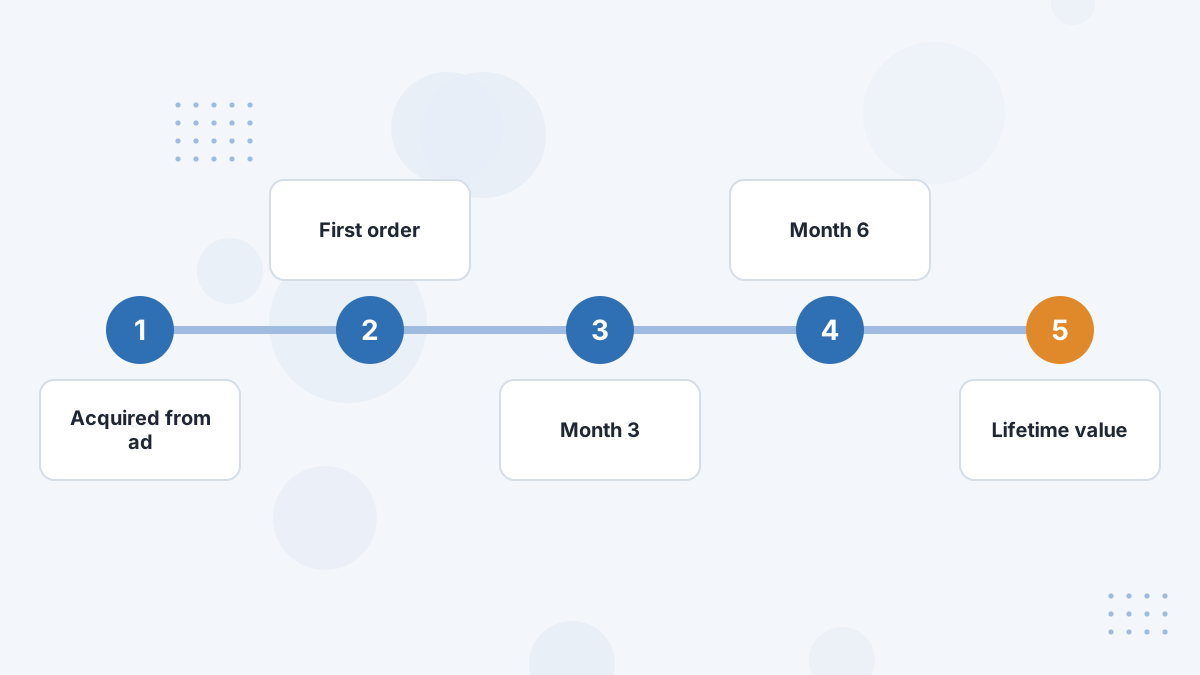
Wicked Reports is built around lifetime value. It groups customers by acquisition date and tracks how their revenue grows, which suits subscription and repeat-purchase businesses. It's reported to start around $499 a month.
Its standout idea is separating new-customer acquisition from re-engagement, so an email or retargeting campaign doesn't take credit for customers your prospecting ads originally won. That's valuable when much of your revenue comes from repeat orders.
Hyros also offers LTV and cohort reporting, and adds call attribution, ad-platform feedback and setup support on every plan. Compare them in Hyros vs Wicked Reports or read our guide to tracking customer lifetime value.
6. RedTrack: Best for Affiliates and Media Buyers
RedTrack is a performance tracker for people sending traffic to offers, including offers they don't own. It handles postbacks, multiple traffic sources and rule-based automation, with published plans including a free tier for ecommerce tracking.
Media buyers like its automation rules, which can pause or adjust campaigns when metrics cross thresholds. It also supports many traffic sources beyond the big three, such as native and push networks.
If you run your own products and checkout, Hyros's end-to-end revenue tracking is the better fit. If you're an affiliate buying traffic, RedTrack is purpose-built. See Hyros vs RedTrack.
7. ClickMagick: Best Budget Tracker for Funnel Marketers
ClickMagick offers link tracking, first-party conversion tracking and bot filtering, with a Starter plan from $79 a month on monthly billing. It's a common first step for marketers moving beyond platform reporting.
Its link-tracking roots make it handy for solo-ad buyers, email marketers and anyone who promotes through many links. Higher plans add more clicks, more users and extra features at $199 and $349 a month on monthly billing.
It's lighter on sales-call attribution and guided support than Hyros. As your funnel and spend grow, the gap widens. See Hyros vs ClickMagick.
8. AnyTrack: Best for Lead Gen and Affiliate Sites
AnyTrack tracks conversions from affiliate networks and lead forms and syncs them to ad platforms' conversion APIs. A free plan is available, with paid plans from about $100 a month.
It's a neat fit for content and lead-gen sites. For businesses with their own funnels and sales teams, Hyros goes deeper. Compare in Hyros vs AnyTrack.
9. SegMetrics: Best for Email-Driven Course Businesses
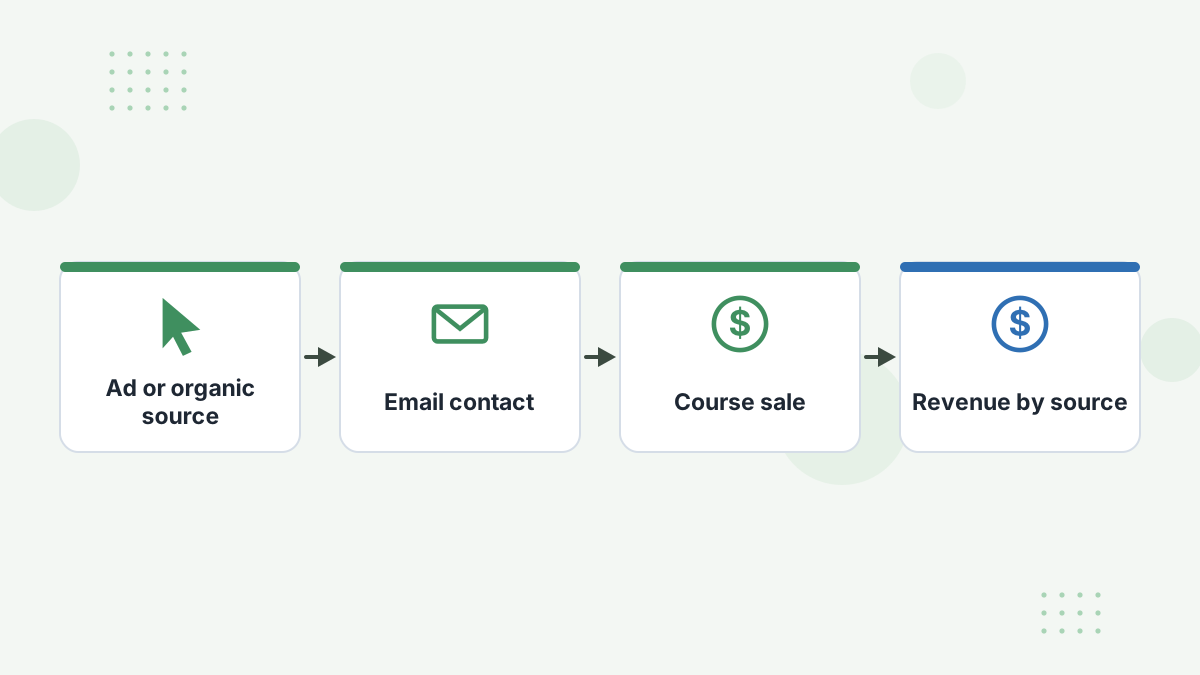
SegMetrics connects your email platform and cart to report revenue by lead source. Pricing is based on contacts, from about $57 a month, which keeps it affordable for small course creators.
It's less suited to call funnels and to feeding sales back to ad platforms, which matter more as ad spend grows. See Hyros vs SegMetrics.
10. Google Analytics 4: Best Free Baseline
GA4 is free, offers data-driven attribution and integrates closely with Google Ads. Every business should have it set up.
Its limits are browser-based tracking, consent gaps and no view of calls or offline closes. Use it as a baseline, not your source of truth for paid social. See Hyros vs Google Analytics and our GA4 attribution guide.
Mistakes to Avoid When Choosing a Tracker
- Picking on price alone. A cheap tracker that can't see your call closes or repeat orders will under-credit your best ads.
- Running two tools that both send conversions to Meta. Duplicate server-side events inflate results and confuse the algorithm.
- Expecting the numbers to match Ads Manager. They won't, and that's the point. Judge the tool on whether its numbers match your bank.
- Skipping setup testing. Place test orders and book test calls before trusting any report.
- Switching too often. Attribution gets more useful as history builds. Give a tool at least a couple of buying cycles.
How to Choose the Right Ad Tracking Software
Start with your business model, then check your budget and team.
You Close Sales on Calls
Hyros. Attributing bookings, show-ups and closes to ads is its specialty.
You Sell Courses or Coaching
Hyros for webinar and application funnels; SegMetrics if you're small and email-led.
You Run a Shopify Store
Hyros for heavy multi-platform spend; Triple Whale for dashboards first.
You're an Affiliate
RedTrack, ClickMagick or AnyTrack for traffic to offers you don't own.
You're Just Starting
GA4 plus platform reporting, then upgrade when spend justifies it.
For narrower shortlists, see our picks for Shopify, course creators, agencies and Facebook ads.
Ad Tracking Software FAQs
What is the most accurate ad tracking software?
Accuracy depends on your journey. For multi-step funnels and calls, server-side tools that match identity across devices, like Hyros, capture the most.
Is there free ad tracking software?
Yes. GA4 is free, and Triple Whale, RedTrack and AnyTrack offer free tiers with limits.
Do you need ad tracking software if you only run Meta ads?
If spend is modest and checkout is instant, Meta's own reporting may be enough at first. Once you scale or add email and calls, an independent tracker pays off.
What's the difference between ad tracking and attribution software?
The terms overlap. Tracking records the touchpoints; attribution decides how much credit each gets. Most modern tools do both.
Start With Our Top Pick
If your funnel has more than one step, a Hyros demo is the quickest way to see what your ad platforms are missing.
Book a Hyros Demo