An attribution model is a rule for splitting credit between the touches in a buyer's journey. Hyros records the whole journey, so changing the model doesn't change the data, only how credit is shared. That's powerful, as long as you know which lens answers which question.
The Models Hyros Offers
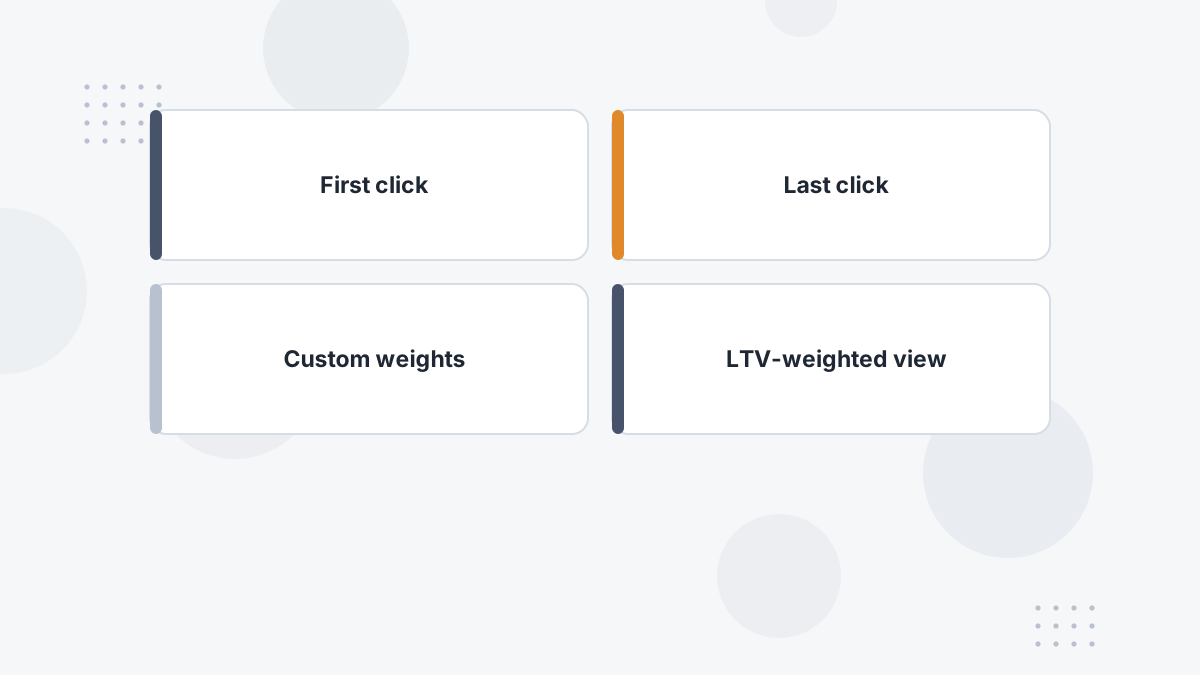
Hyros's materials describe these main views:
- First click: all credit to the touch that started the journey.
- Last click: all credit to the final touch before the sale.
- Custom weighting: adjustable weights between first touch, assists and last touch.
- LTV-weighted views for info businesses, favoring sources that bring long-term buyers.
Because these sit on identity-matched journeys, they can span devices and long gaps. That's different from models applied only to what a browser pixel saw.
First Click: Who Starts Your Best Journeys?
First click answers: which ads bring in people who eventually buy? It's the right lens for prospecting and cold traffic, which often looks weak on last click because other touches close the sale.
Example: a YouTube ad introduces a buyer who later returns via a retargeting ad and an email. On last click, YouTube gets nothing. On first click, it gets the credit for starting the journey.
Last Click: What Tips People Over the Line?
Last click answers: what finally converts people? It's useful for judging retargeting, email and branded search.
The danger is over-crediting those closers. If you scaled only on last click, you'd starve the prospecting that feeds them. Use it alongside first click, not instead of it.
Custom Weights: Sharing Credit Deliberately
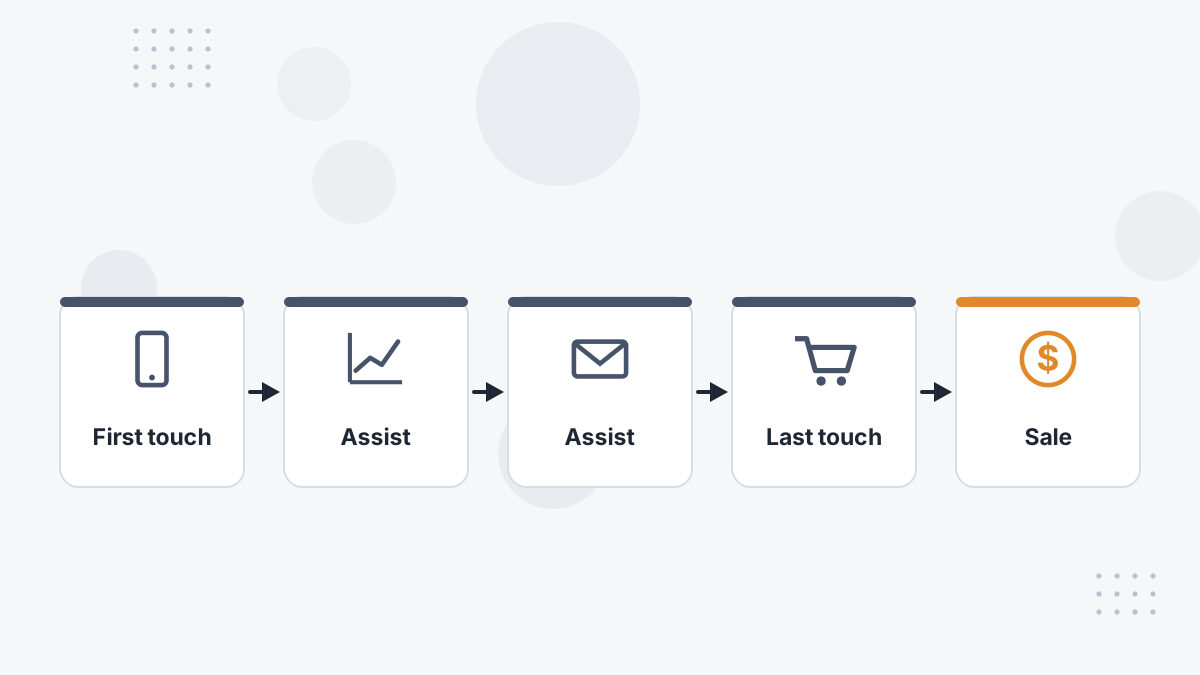
Custom weighting lets you decide how much credit goes to the first touch, the assists in the middle and the last touch. A common pattern is to weight first and last touches more heavily than assists.
The value is consistency. Once your team agrees on weights, everyone reads the same numbers. Just don't change weights mid-test, or before-and-after comparisons stop meaning anything.
LTV-Weighted Views
For info and subscription businesses, Hyros offers views that account for lifetime value. A source that brings buyers who keep purchasing gets more credit than one bringing one-time buyers.
This is where first-order ROAS misleads most. An ad with modest front-end returns can be your best campaign if its buyers keep paying. See tracking customer lifetime value.
Which Model to Use for Which Decision
| Decision | Best View | Why |
|---|---|---|
| Scale or cut prospecting | First click | Credits ads that start journeys |
| Judge retargeting and email | Last click | Shows what closes |
| Weekly budget review | Agreed custom weights | Balanced and consistent |
| Subscription or high-ticket offers | LTV-weighted | Values long-term buyers |
For background, see our general guides to attribution models and first touch vs last touch.
Common Mistakes
- Using one model for every decision. Different questions need different lenses.
- Comparing Hyros last click to Meta's default. Meta's window and view-through rules differ, so the numbers won't match.
- Changing models during a test. Hold the model constant.
- Forgetting the window. A long journey needs a window long enough to see it. See attribution windows.
Hyros Attribution Model FAQs
What is Hyros's default attribution model?
You can choose your view in reports. Most teams compare first and last click, then agree custom weights.
Does changing the model change the data?
No. The journeys stay the same; only the credit split changes.
Which model is best for cold traffic?
First click, ideally with a long window.
Does Hyros offer data-driven attribution?
Hyros focuses on transparent rule-based and custom-weighted models applied to identity-matched journeys.
Judge Every Ad Through the Right Lens
Book a Hyros demo and compare first-click, last-click and custom views on your funnel.
Book a Hyros Demo