Windows are one of the main reasons ad platforms, analytics tools and attribution software disagree. Understanding them makes discrepancies far less mysterious.
What Is an Attribution Window?
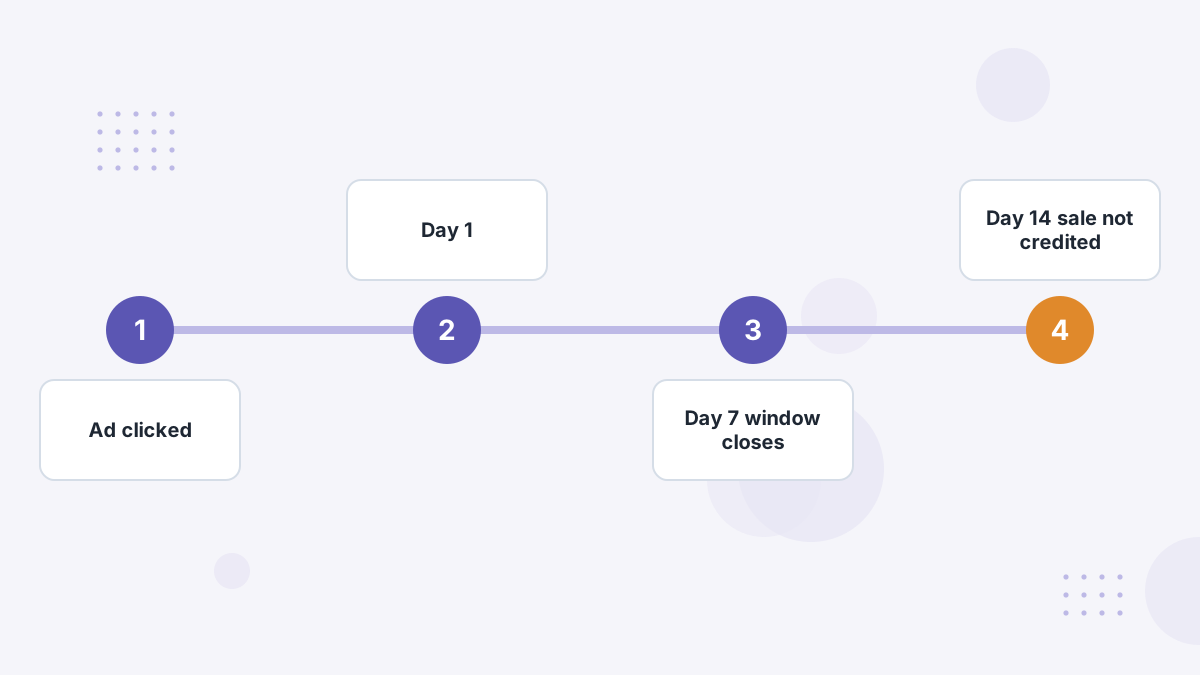
An attribution window (also called a lookback or conversion window) is the period after an ad interaction during which a conversion can be credited to that ad. If someone clicks on Monday and buys the following Tuesday, a 7-day click window credits the ad; a 1-day window doesn't.
What this means for you: the window should roughly match how long your customers take to buy. Otherwise your reports either miss real influence or claim too much.
Click, View and Engagement Windows
- Click-through windows credit conversions after someone clicked the ad.
- View-through windows credit conversions after someone saw the ad without clicking.
- Engagement windows credit conversions after an interaction short of a link click, such as a video watch.
View and engagement credit capture real influence for some ads, especially video. But they also credit people who would have bought anyway, so they tend to inflate results for retargeting.
Platform Defaults
| Platform | Default or Common Setting | Notes |
|---|---|---|
| Meta | 7-day click, 1-day engage-through, 1-day view | 7-day and 28-day view removed from the Ads Insights API in January 2026 |
| Google Ads | Set per conversion action | Click-through windows are configurable by action |
| GA4 | Configurable lookback windows | Uses data-driven attribution by default |
See Meta attribution settings and Google Ads attribution for details.
Matching the Window to Your Sales Cycle
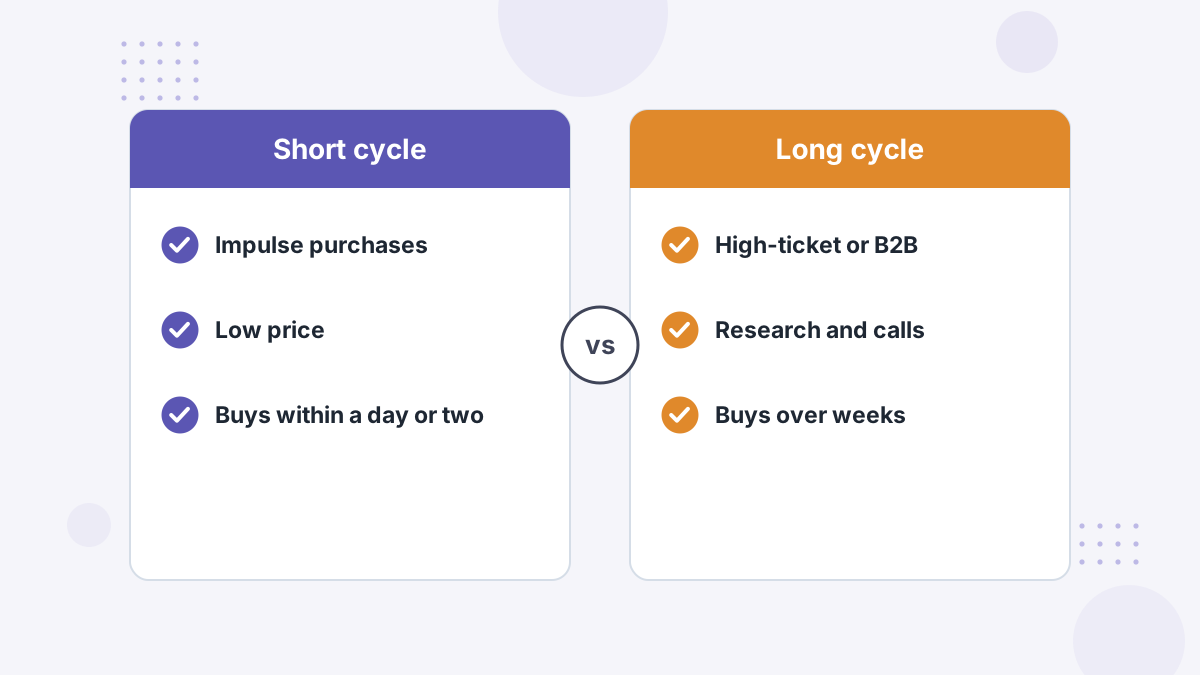
Find your typical time from first click to purchase, using your own data where possible. Then:
- Impulse products: short click windows (1 to 7 days) are usually enough.
- Considered purchases: 7 days may miss many buyers; look at 28-day click views where available.
- High-ticket and B2B: journeys often run weeks or months, beyond what platforms track. An independent tool with long windows is the realistic answer.
Common Window Mistakes
- Comparing tools with different windows and expecting the numbers to match.
- Changing windows mid-test, which makes before-and-after comparisons meaningless.
- Judging retargeting on view-through results, which inflates them.
- Killing prospecting on 7-day results when your cycle is longer.
Attribution Window FAQs
What's Meta's default attribution window?
In 2026, 7-day click, 1-day engage-through and 1-day view for website conversion campaigns.
Can you still use 28-day view on Meta?
No. Meta removed 7-day and 28-day view windows from its Ads Insights API in January 2026.
Should you include view-through conversions?
Consider them for video and awareness, but compare click-only views to avoid over-crediting.
What window should a coaching business use?
A long one, often 30 days or more, which usually requires an independent tracker.
Track Journeys as Long as Your Buyers Take
Book a Hyros demo to see attribution beyond platform windows.
Book a Hyros Demo