If you only ever look at last-click results, prospecting ads will look weak and retargeting will look brilliant. If you only look at first click, the reverse. Seeing both is how you find the truth in between.
What First-Touch Attribution Measures
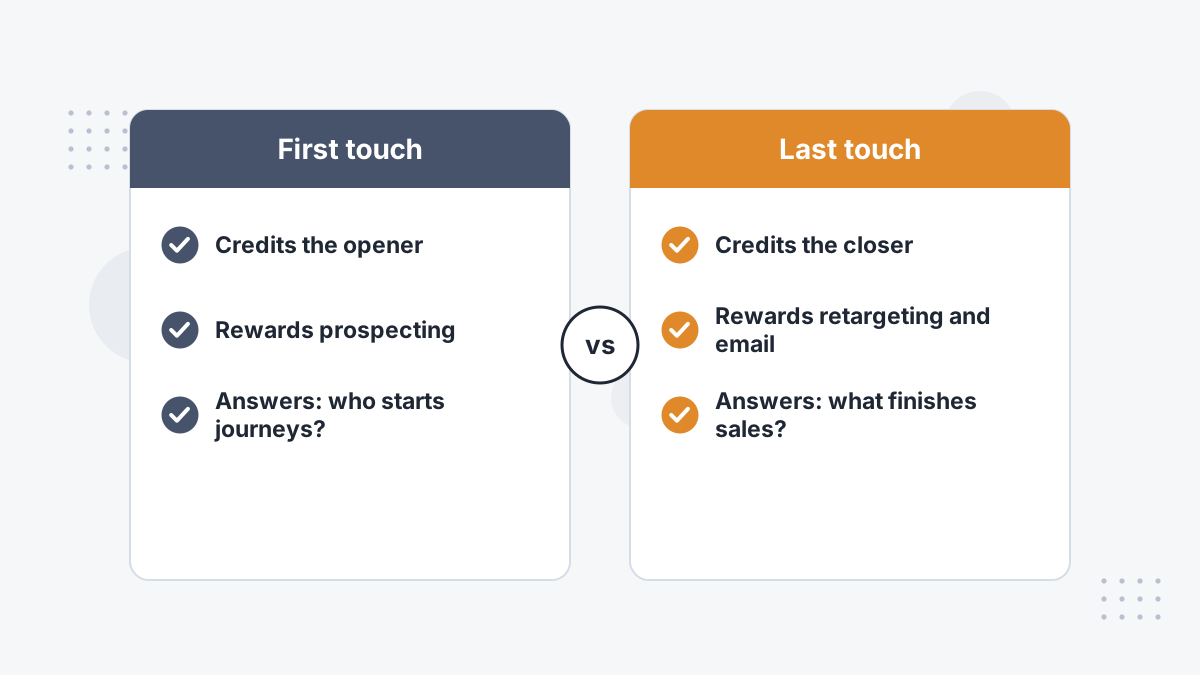
First touch gives 100% of the credit to the first tracked interaction. It answers: which ads bring in people who eventually buy?
It's the right lens for cold traffic and top-of-funnel content, which rarely gets the last click but often starts the relationship.
What Last-Touch Attribution Measures
Last touch gives 100% of the credit to the final interaction before the conversion. It answers: what tips people over the line?
It's useful for retargeting, email and branded search, but it systematically over-credits them, because they catch people already close to buying.
A Worked Example
Illustrative numbers: a cold YouTube campaign and a Meta retargeting campaign each spend $5,000 in a month.
| Campaign | First-Touch Revenue | Last-Touch Revenue |
|---|---|---|
| YouTube prospecting | $22,000 | $6,000 |
| Meta retargeting | $4,000 | $20,000 |
On last touch alone, you'd cut YouTube and scale retargeting. But retargeting needs a pool of interested people, and YouTube was creating most of them. Cut YouTube and retargeting eventually dries up.
The Biases to Watch
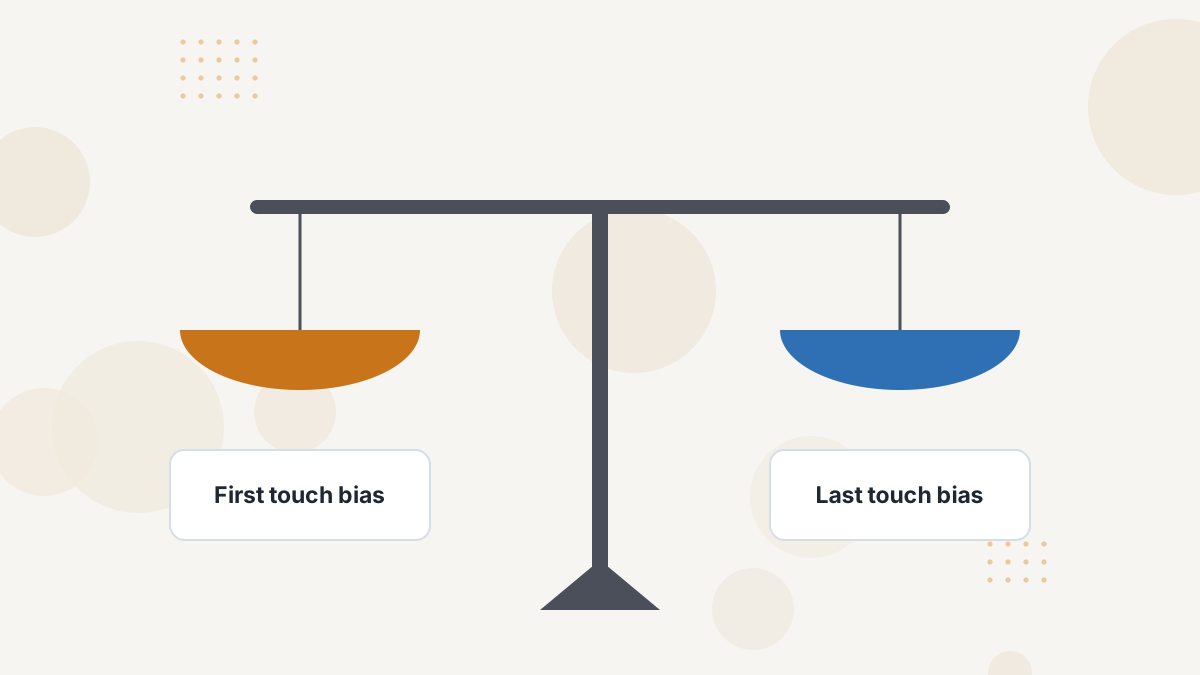
- First touch ignores everything that nurtured and closed the buyer, so it can over-reward broad awareness ads.
- Last touch ignores how buyers found you, so it over-rewards retargeting, email and branded search.
- Both depend on tracking. If the first touch happened on another device that wasn't stitched, first touch will credit the wrong source.
How to Use Both Together
- Judge prospecting on first touch with a window long enough for your buying cycle.
- Judge retargeting and email on last touch, but check they aren't just catching buyers your prospecting already won.
- Use a balanced model such as position-based for overall budget splits.
- Watch the trend when you change budget: does total revenue follow?
Making First Touch Trustworthy
First-touch data is only as good as your ability to connect early visits to later purchases. That requires consistent link tagging, tracking on every page and identity matching across devices. See cross-device tracking and UTM parameters.
First Touch vs Last Touch FAQs
Which is better, first or last touch?
Neither alone. Use first touch for prospecting and last touch for closers, plus a balanced model for budgets.
What does Google Analytics use?
GA4 defaults to data-driven attribution, with last-click options available.
Why does retargeting look so good on last touch?
It reaches people already likely to buy, so it often gets the final click.
How long should the first-touch window be?
At least as long as your typical time from first click to purchase.
See Which Ads Start Your Best Sales
Book a Hyros demo and compare first-touch and last-touch views across your platforms.
Book a Hyros Demo