Two campaigns can have identical first-order ROAS and wildly different value six months later. If your customers buy again or subscribe, lifetime value by source is one of the most important numbers you can track.
What Customer Lifetime Value Means
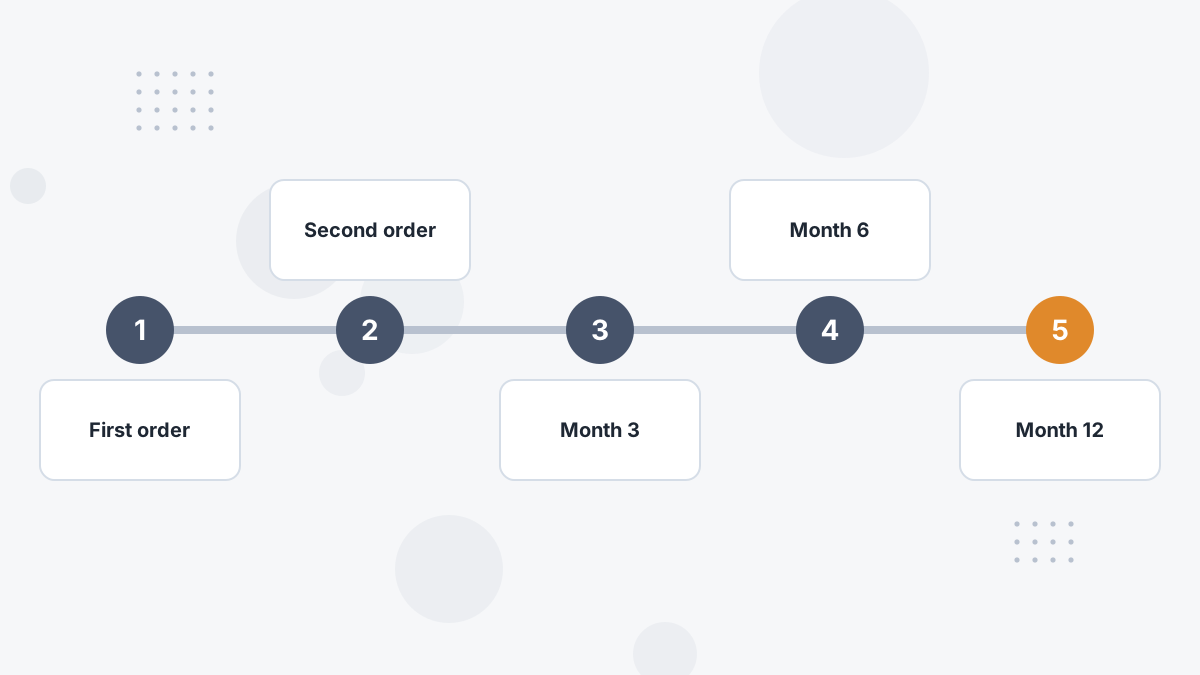
Customer lifetime value (LTV) is the total revenue, or ideally gross profit, a customer generates over their relationship with you. For ad decisions, you want LTV by acquisition source: what customers from each campaign are worth over time.
Simple LTV Formulas
| Approach | Formula | Best For |
|---|---|---|
| Historical LTV | Total revenue from a cohort ÷ customers in the cohort | Businesses with history |
| Subscription LTV | Average monthly revenue ÷ monthly churn rate | Recurring billing |
| Repeat purchase LTV | Average order value × purchase frequency × lifespan | Ecommerce |
| Gross profit LTV | Any of the above × gross margin | Profit decisions |
Example: a subscription at $40 a month with 5% monthly churn has an estimated LTV of $40 ÷ 0.05 = $800 in revenue.
Cohort Analysis by Ad Source
Group customers by when and where they were acquired, then track their cumulative value at 30, 60, 90 days and beyond. Compare cohorts from different campaigns.
If customers from a TikTok campaign reach twice the 90-day value of those from a discount-heavy Meta campaign, the TikTok campaign can afford a higher acquisition cost.
What You Need to Track LTV by Source
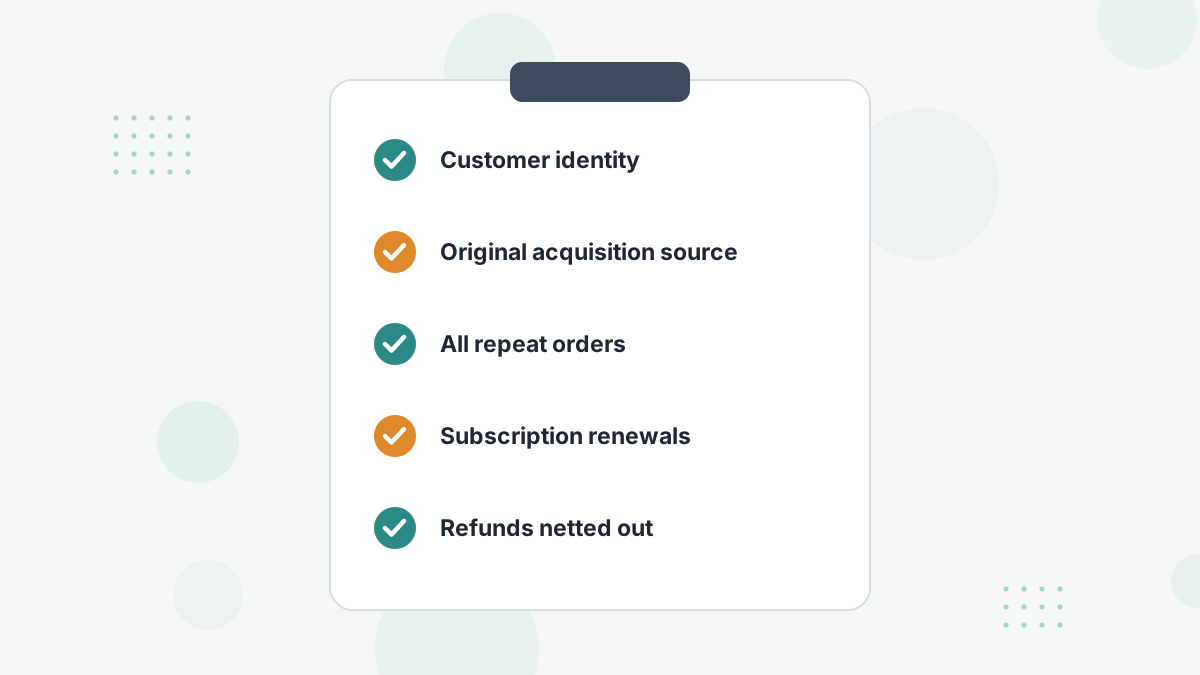
- Persistent customer identity, such as email, across purchases.
- The original acquisition source stored with each customer.
- All later revenue: repeat orders, renewals and upsells, from every system.
- Refunds and cancellations netted out.
The hard part is tying renewals in Stripe or a subscription app back to the first ad. That's where attribution tools with billing integrations help. See Hyros Stripe integration.
Using LTV in Ad Decisions
- Set acquisition targets from LTV, not first-order ROAS alone.
- Compare channel CAC with channel LTV. See CAC.
- Feed value signals to ad platforms where possible, so bidding favors high-value buyers.
- Review cohorts monthly as data matures.
Lifetime Value FAQs
How do you calculate LTV for subscriptions?
A simple estimate is average monthly revenue divided by monthly churn rate.
Should LTV use revenue or profit?
Profit is better for spending decisions; revenue is simpler to track.
How long until LTV data is useful?
Early cohorts at 30 to 90 days give directional signals; longer windows firm them up.
Can ad platforms optimize for LTV?
Some support value-based bidding; sending accurate values helps.
Scale Ads That Win Customers Worth Keeping
Book a Hyros demo to see lifetime value by campaign and creative.
Book a Hyros Demo