Most of the conversation about Hyros focuses on reporting: seeing which ads truly make money. AI ad optimization is the other half. It uses the same tracking data to make the ad platforms' own targeting smarter.
Here's what the feature does, why it matters, how it connects to each platform, and how to avoid the mistakes that undo its benefit.
What Hyros AI Ad Optimization Is
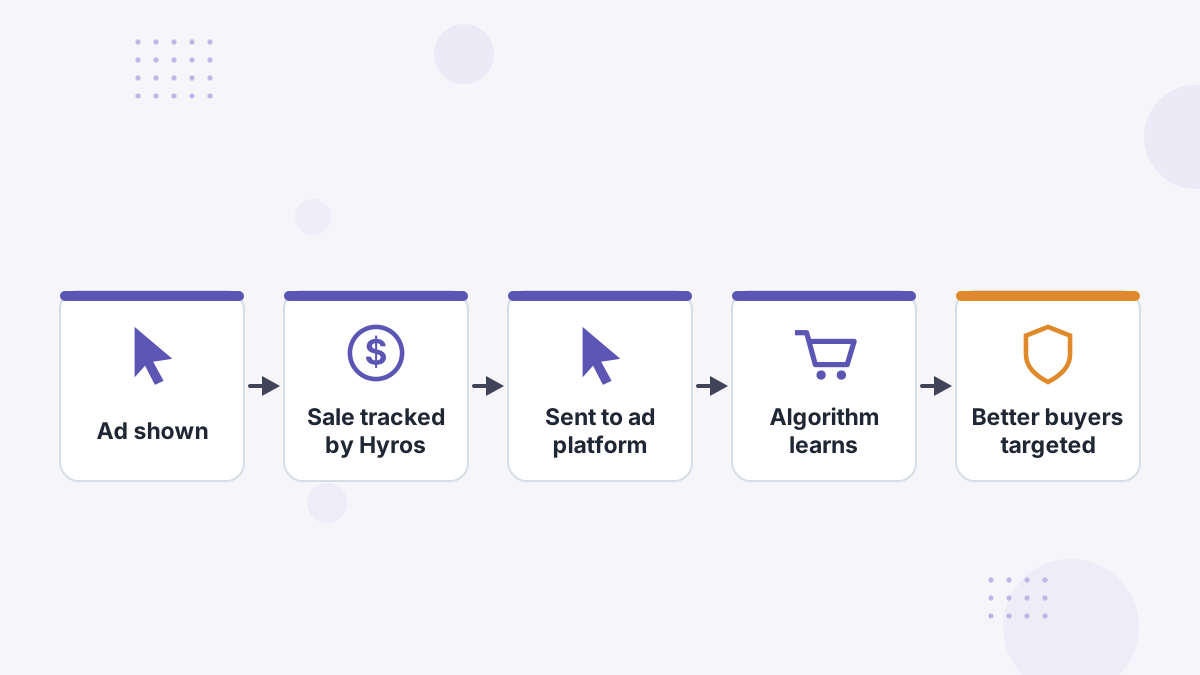
AI ad optimization is Hyros's name for sending its tracked conversions back into the ad platforms. When Hyros matches a sale, booked call or closed deal to an ad, it reports that conversion to the platform that ran the ad.
The platform then treats it like any other conversion signal. Its bidding and delivery systems learn which people, placements and creatives lead to real revenue, and shift spend toward more of the same.
Hyros describes this as an ad feedback loop. The point is simple: better data in, better targeting out.
Why Ad Algorithms Need Better Data
Modern ad buying is largely automated. Meta's Advantage+ campaigns and Google's Smart Bidding decide who to show your ads to, and how much to bid, based on the conversion events you feed them.
What this means for you: if the platform only sees a fraction of your real sales, it optimizes toward that fraction. Privacy changes, ad blockers and cross-device journeys mean pixels miss sales. Calls and offline closes are never seen at all.
The result can be an algorithm that chases cheap leads who never buy, or that undervalues the audience producing your best customers. Filling those gaps gives the algorithm a more accurate target. Our Facebook attribution problems guide explains the gaps in detail.
How Hyros Sends Conversions to Each Platform
Hyros uses each platform's official server-side channel, so conversions arrive the same way first-party data from your own servers would.
| Platform | Channel Hyros Uses | Learn More |
|---|---|---|
| Meta (Facebook and Instagram) | Conversions API | Conversions API guide |
| Google Ads and YouTube | Offline conversion imports | Google offline conversions |
| TikTok | Events API | TikTok Events API |
Because these are server-to-server connections, they don't depend on a browser loading a page. That's what lets Hyros pass along conversions that happened on a call, an invoice or another device.
Which Conversions to Send
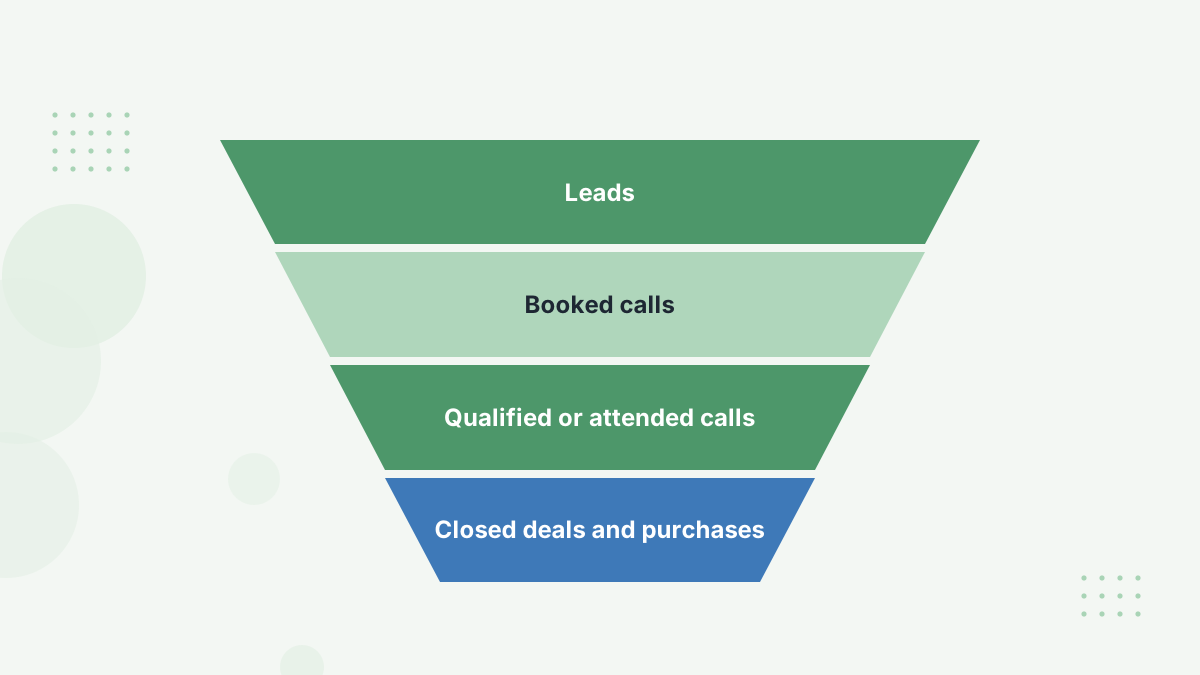
What you send matters as much as how much. The deeper in your funnel the event, the closer the algorithm gets to optimizing for revenue rather than activity.
- Purchases with value. The baseline for ecommerce and digital products. Including order value lets platforms favor higher-value buyers.
- Booked calls. Useful for call funnels where purchases happen later and volume is otherwise too low to optimize on.
- Qualified or attended calls. Hyros says it can feed qualified calls and closes back to the platforms, which helps filter out no-shows and tire-kickers.
- Closed deals. The truest signal for high-ticket offers, though volume may be low.
Our recommendation: optimize on the deepest event that still gives the platform enough volume to learn from. For many coaching funnels, that's a qualified or attended call rather than a raw lead. See Hyros call tracking.
Seeing Hyros Data Inside Ads Manager
Hyros also offers a browser extension that adds its attribution columns, such as Hyros-tracked sales and revenue, directly inside the Meta and Google ad managers.
Why that matters: media buyers work in Ads Manager all day. Seeing Hyros's numbers beside the platform's own figures, at campaign, ad set and ad level, makes it far easier to act on them without switching tools.
It's also the quickest way to spot campaigns the platform over-credits or under-credits. If Meta shows ten purchases and Hyros shows four, that's an ad set to investigate before scaling.
Setting It Up
Hyros's setup team handles most of this, but here's the order of work:
- Install tracking and integrations. Hyros needs to see conversions before it can send them.
- Map your conversion events. Decide which events (purchase, lead, booked call, demo, close) to send.
- Connect each ad account. Authorize Hyros to send events to Meta, Google and TikTok.
- Verify with diagnostics. Check events are arriving in each platform's events tools.
- Choose optimization events in campaigns. Point new or test campaigns at the Hyros-fed events.
Hyros's own documentation notes that its AI pixel optimization approach has changed over time following iOS updates, so follow current guidance from the setup team rather than old tutorials. Our Hyros setup guide covers the rest of onboarding.
What to Expect, and What Not To
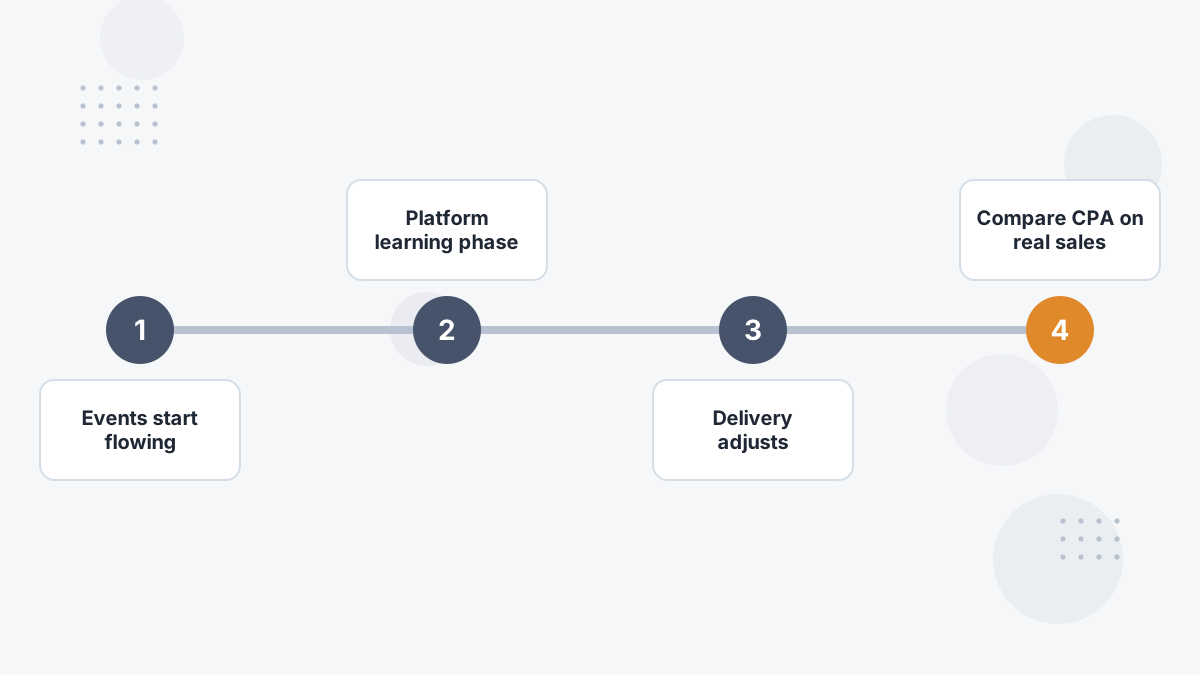
Hyros markets meaningful improvements in ad ROI and lower acquisition costs from this step. We'd treat those as the vendor's claims and measure the effect on your own account.
Expect a learning period when campaigns start optimizing on new events. Results can wobble before they settle, so avoid judging the change on a few days of data. Compare cost per real sale, as measured by Hyros, before and after.
Don't expect miracles from weak creative or offers. Better data helps algorithms find buyers more efficiently; it can't make people want something they don't.
Common Mistakes to Avoid
- Sending the same event twice. If your store already sends purchases to Meta's Conversions API, coordinate with Hyros so the platform can deduplicate. Double-counted events inflate results and confuse optimization.
- Optimizing on a shallow event. Leads are plentiful but often low quality. Push deeper as volume allows.
- Changing too much at once. Switch the optimization event, not the creative, audience and budget at the same time.
- Ignoring the platform's diagnostics. Check event match quality and errors in each platform's events tools.
Hyros AI Ad Optimization FAQs
Does Hyros change your ads automatically?
No. It sends conversion data to the ad platforms. Your campaigns, budgets and creatives stay under your control.
Is this the same as Meta's Conversions API?
Hyros uses the Conversions API as the channel, but adds sales its matching recovered, including calls and offline closes.
Can you send booked calls as conversions?
Yes. Hyros tracks bookings and can feed qualified calls and closes back to the platforms.
Do you need a big budget for this to help?
Algorithms need enough conversion volume to learn, so benefits grow with spend. Even smaller accounts gain from cleaner purchase data.
Give Your Ad Platforms Better Data
Book a demo to see how Hyros would feed your real sales and calls back to the algorithms that spend your budget.
Book a Hyros Demo