Most attribution problems get worse with messy tagging. "Facebook", "facebook", "fb" and "meta" all become separate sources in reports. A clear UTM convention fixes that in an afternoon.
The Five UTM Parameters
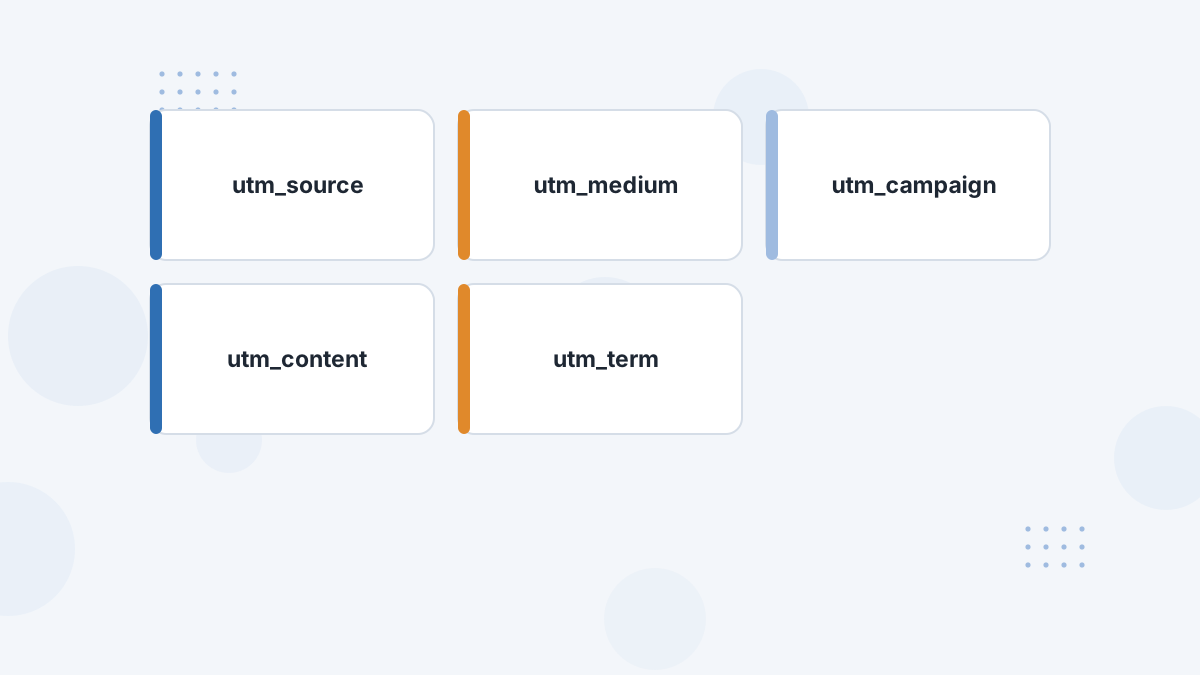
| Parameter | Describes | Example |
|---|---|---|
| utm_source | Where the traffic comes from | facebook, google, newsletter |
| utm_medium | The type of traffic | paid_social, cpc, email |
| utm_campaign | The campaign name | spring_sale_2026 |
| utm_content | The specific ad or link | video_testimonial_a |
| utm_term | Keyword or audience | lookalike_buyers |
A tagged link looks like: yoursite.com/offer?utm_source=facebook&utm_medium=paid_social&utm_campaign=spring_sale_2026.
Naming Conventions That Hold Up
- Lowercase everything to avoid case splits.
- Use underscores or hyphens, not spaces.
- Fix a short list of sources and mediums and stick to it.
- Keep a shared reference sheet for the team.
- Name campaigns consistently with your ad accounts.
Dynamic Parameters in Ad Platforms
Ad platforms can fill UTMs automatically with dynamic values, such as campaign, ad set and ad names or IDs. Meta, Google and TikTok each support URL parameter templates at the campaign or ad level.
Using IDs rather than names makes tagging robust to renaming. Google's auto-tagging also adds its own click identifier; keep it on alongside UTMs. See Google Ads attribution.
Tagging Email, Organic and Offline
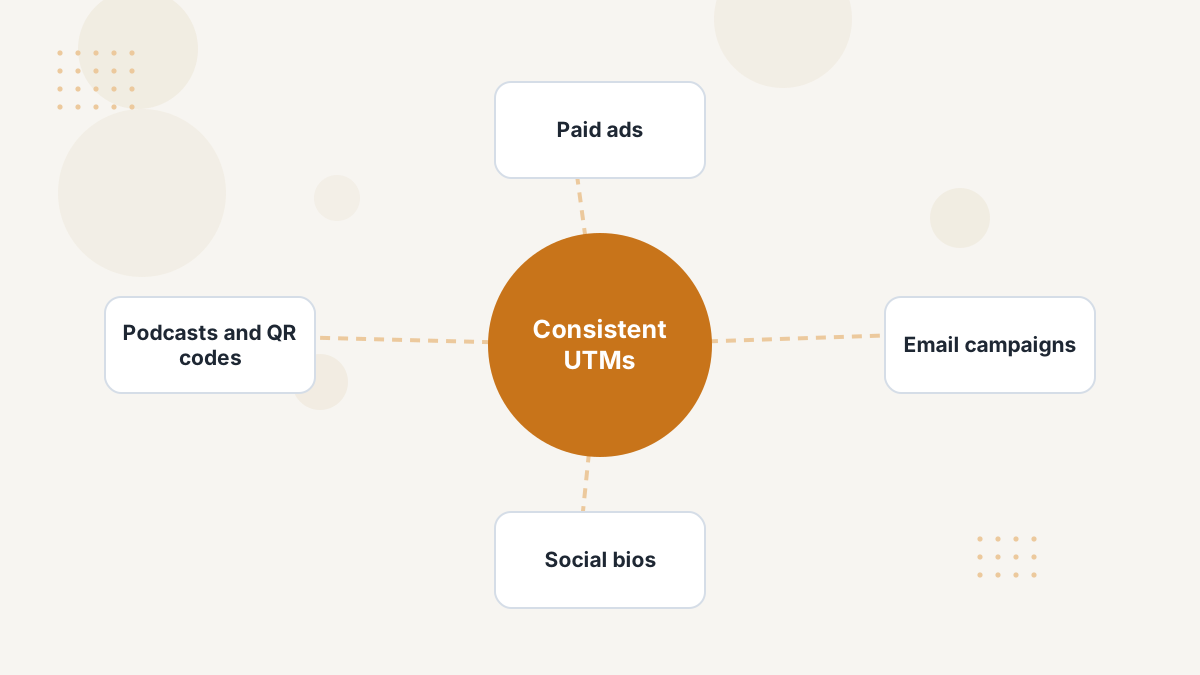
- Email: tag every link in campaigns and automations.
- Organic social: tag bio links, posts and video descriptions. See organic tracking.
- Podcasts and offline: use short redirect links or QR codes carrying UTMs.
- Partners and influencers: give each a unique tagged link.
Common UTM Mistakes
- Tagging internal links on your own site, which overwrites the original source.
- Inconsistent capitalization and spelling.
- Redirects that strip parameters before the landing page loads.
- Forgetting to tag email and social links.
Privacy features like Link Tracking Protection target click IDs; UTM parameters are generally preserved. See iOS tracking changes.
UTM Parameter FAQs
Which UTM parameters are required?
Source, medium and campaign are the core three; content and term add detail.
Should internal links have UTMs?
No. They overwrite the original source in analytics.
Do UTMs work after iOS changes?
Generally yes; Apple's link protections target known click IDs rather than UTMs.
Should you use names or IDs?
IDs are more robust; names are easier to read. Many teams use both.
Get More From the UTMs You Already Use
Book a Hyros demo to see tagged visits matched to real revenue.
Book a Hyros Demo