A 3x ROAS sounds great until you realize your margins mean you needed 3.5x to break even. Break-even ROAS is the number that tells you whether a campaign is actually making money.
The Break-Even ROAS Formula
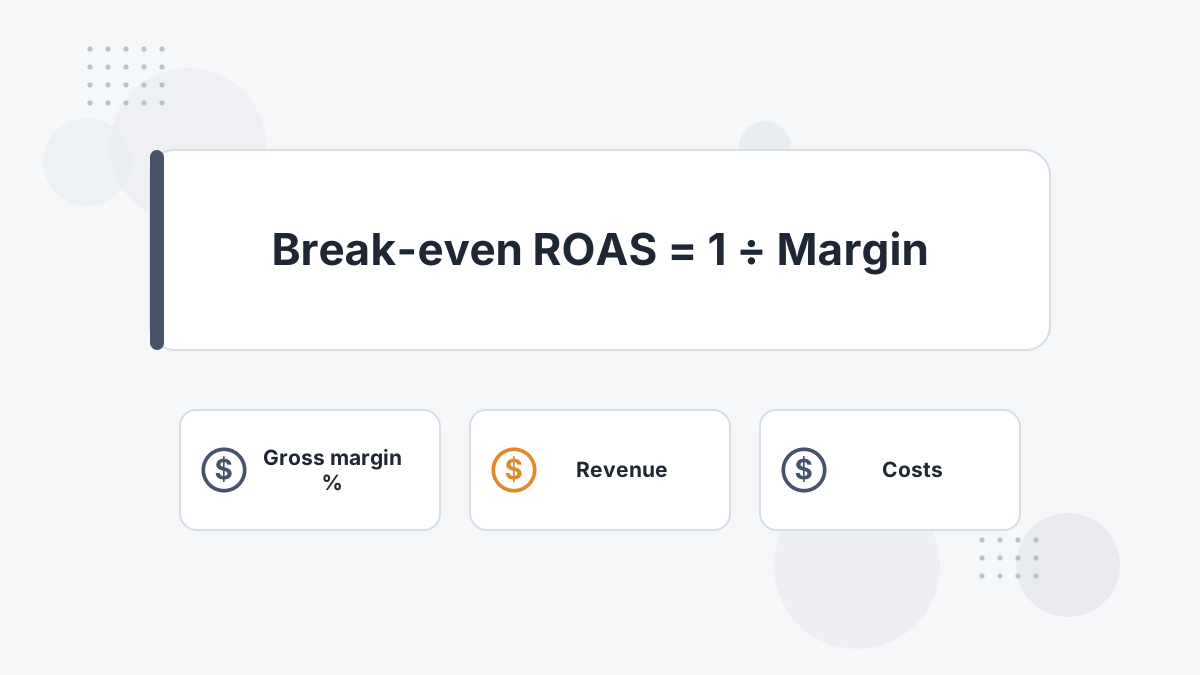
Break-even ROAS = 1 ÷ contribution margin (as a decimal).
Contribution margin is revenue minus the variable costs of each sale: product cost, shipping, payment fees and any other per-order costs, expressed as a percentage of revenue.
Worked Examples
| Contribution Margin | Break-Even ROAS | Typical Business |
|---|---|---|
| 25% | 4.0x | Low-margin physical products |
| 40% | 2.5x | Typical DTC brand |
| 60% | 1.67x | Higher-margin products |
| 80% | 1.25x | Digital products and courses |
Example: a product sells for $100. Product cost, shipping and fees total $60, so contribution margin is 40%. Break-even ROAS = 1 ÷ 0.40 = 2.5. Below 2.5x, each sale loses money after ad costs.
What to Include in Costs
- Cost of goods sold per order.
- Shipping and fulfillment you pay.
- Payment processing fees.
- Returns and refunds, averaged across orders.
- Per-order platform or app fees.
Fixed costs like salaries and software are usually excluded from break-even ROAS and covered by profit above it.
Setting a Target ROAS
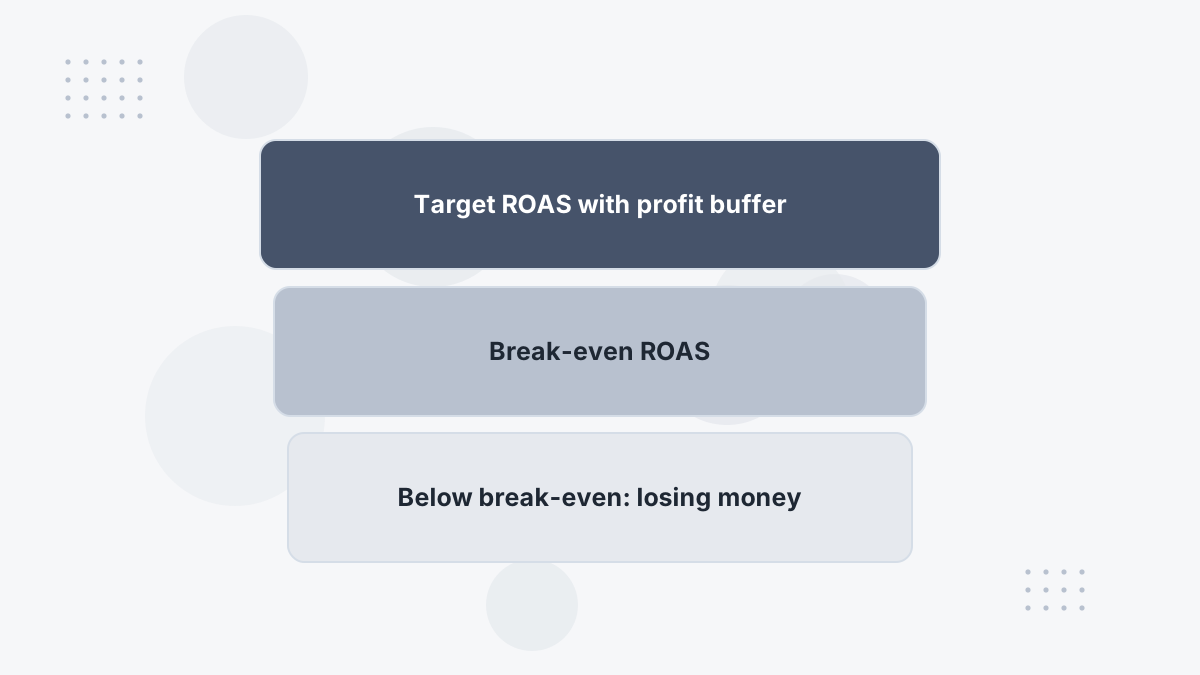
Your target should sit above break-even to leave room for profit and overheads. If break-even is 2.5x, a target of 3x or more might be sensible, depending on your goals.
For subscriptions or repeat buyers, you might accept a front-end ROAS below break-even if lifetime value makes up the difference. See tracking customer lifetime value.
Why Accurate Attribution Matters Here
Break-even ROAS is only useful if the ROAS you compare it to is accurate. Platform-reported ROAS can be inflated by view-through credit and overlap, making losing campaigns look profitable. Use independently attributed revenue. See ROAS explained.
Break-Even ROAS FAQs
How do you calculate break-even ROAS?
Divide 1 by your contribution margin. A 40% margin means a 2.5x break-even ROAS.
Should fixed costs be included?
Usually not; break-even ROAS covers variable costs, with fixed costs covered by profit above it.
Can you run ads below break-even?
Sometimes, if repeat purchases or LTV make customers profitable over time.
What's the difference from POAS?
POAS measures profit per dollar directly; a POAS of 1 is break-even.
Know Which Ads Clear Your Break-Even
Book a Hyros demo to see ROAS on real, de-duplicated revenue.
Book a Hyros Demo