As privacy changes made user-level tracking harder, MMM came back into fashion. But it isn't a drop-in replacement for attribution. Understanding what each does helps you pick the right tool for your size and questions.
How MMM Works
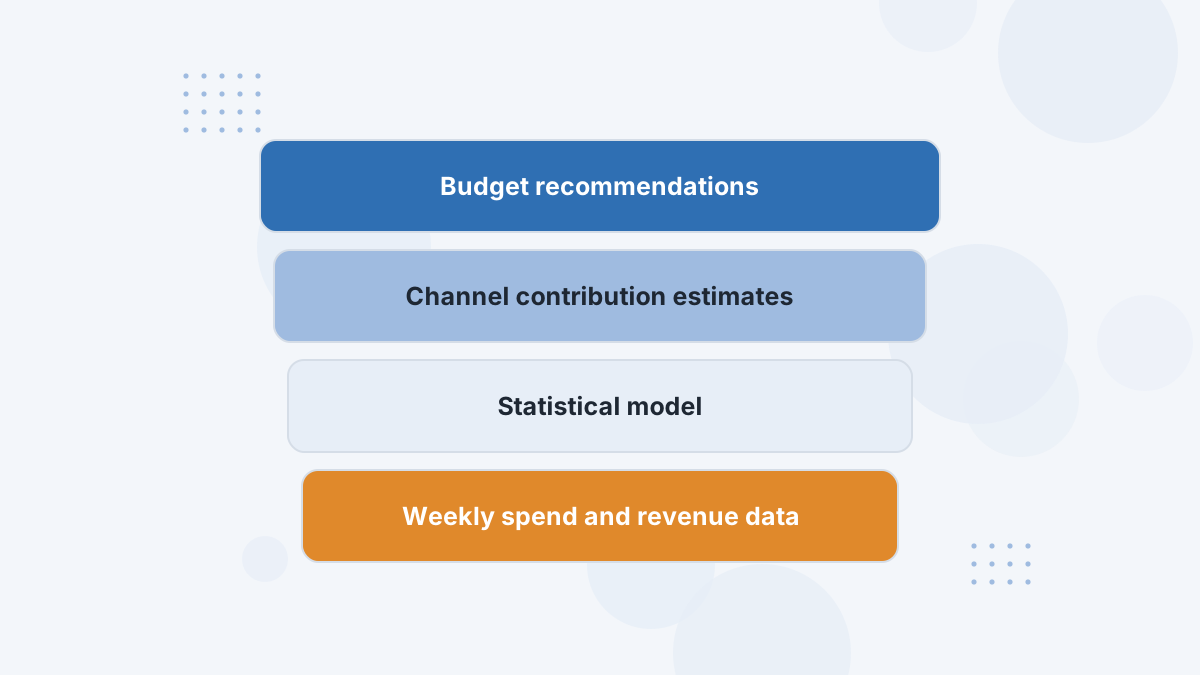
Media mix modeling uses statistical analysis of aggregate data (weekly spend by channel, revenue, seasonality, pricing and promotions) to estimate how much each channel contributes to sales.
Because it doesn't need user-level tracking, MMM can include channels like TV, radio, podcasts and out-of-home, and it isn't affected by cookie or privacy limits.
How Multi-Touch Attribution Works
MTA tracks individual buyers' touches (ad clicks, visits, email clicks) and splits credit for each conversion among them using a model. It works at the ad and creative level, and updates daily. See multi-touch attribution.
MMM vs MTA Compared
| MMM | MTA | |
|---|---|---|
| Data | Aggregate, usually weekly | User-level journeys |
| Granularity | Channel level | Ad and creative level |
| Offline media | Yes | Limited |
| Speed | Slow; needs history | Fast; near real time |
| Privacy sensitivity | Low | Higher |
| Best for | Strategic budget allocation | Daily optimization |
Which Fits Your Business?
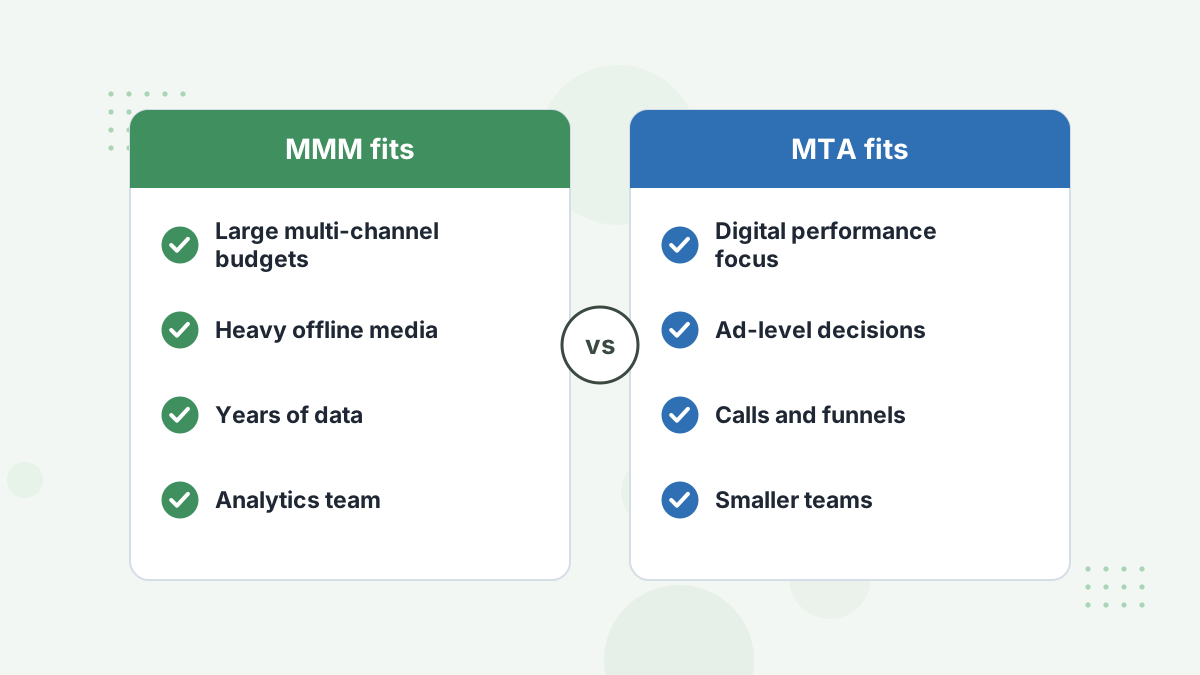
MMM suits large advertisers spending across many channels, including offline, with enough history and an analytics team to maintain models. Tools like Rockerbox and Northbeam offer modeling on enterprise tiers.
MTA suits performance advertisers making daily decisions at the ad level, especially with funnels and calls. Most small and mid-sized businesses get more from accurate MTA than from MMM.
Combining Both
Large brands often use MMM for quarterly budget allocation, MTA for daily optimization, and incrementality tests to calibrate both. Each method covers the others' blind spots.
If you're comparing vendors, see Hyros vs Northbeam and Hyros vs Rockerbox.
MMM vs MTA FAQs
Is MMM replacing attribution?
No. It complements attribution with a channel-level, privacy-resilient view.
How much data does MMM need?
Typically a year or more of consistent weekly spend and revenue data.
Can small businesses use MMM?
It's possible with open-source tools, but results are often unstable with limited data.
Which is better for YouTube and TV?
MMM handles low-click channels better; MTA handles clicked journeys better.
Get Ad-Level Answers Every Day
Book a Hyros demo to see multi-touch attribution across your ad platforms.
Book a Hyros Demo