Tracking tools see clicks and visits. People remember stories. Self-reported attribution, usually a single survey question after purchase, fills the gap between what software records and what actually influenced the buyer.
What Self-Reported Attribution Is
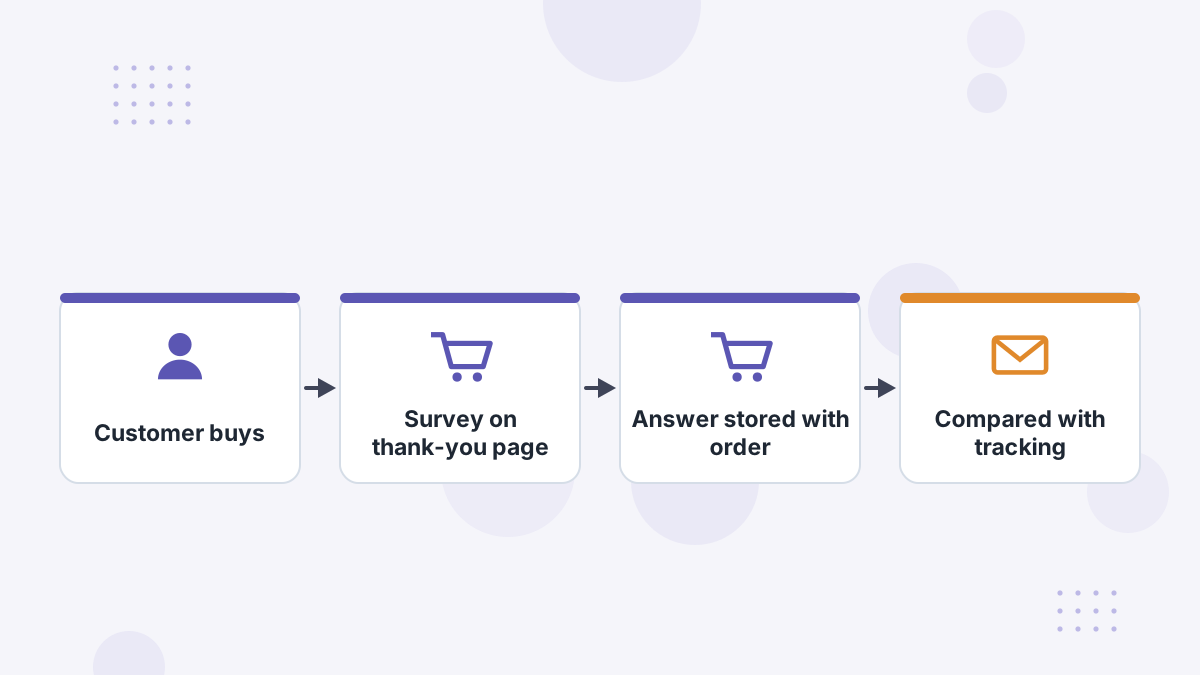
Self-reported attribution asks customers directly where they heard about you, typically on the order confirmation page or in a follow-up email. Answers are stored with the order and analyzed alongside tracked data.
Tools like ThoughtMetric include customer surveys, and many Shopify apps offer post-purchase surveys. See Hyros vs ThoughtMetric.
What Surveys Reveal That Tracking Misses
- Podcasts and audio: listeners type your URL rather than clicking.
- Word of mouth: a friend's recommendation leaves no digital trail.
- Video watched without clicking, on YouTube, TikTok or TV.
- Influencers whose mentions don't use tracked links.
- Offline media like events and print.
Designing a Good Survey Question
- Ask one question on the thank-you page while intent is fresh.
- Use a short list of options matching your real channels, plus "Other".
- Randomize option order to reduce position bias.
- Allow free text under "Other" and review it monthly.
- Make it optional so it doesn't hurt the experience.
Biases to Watch
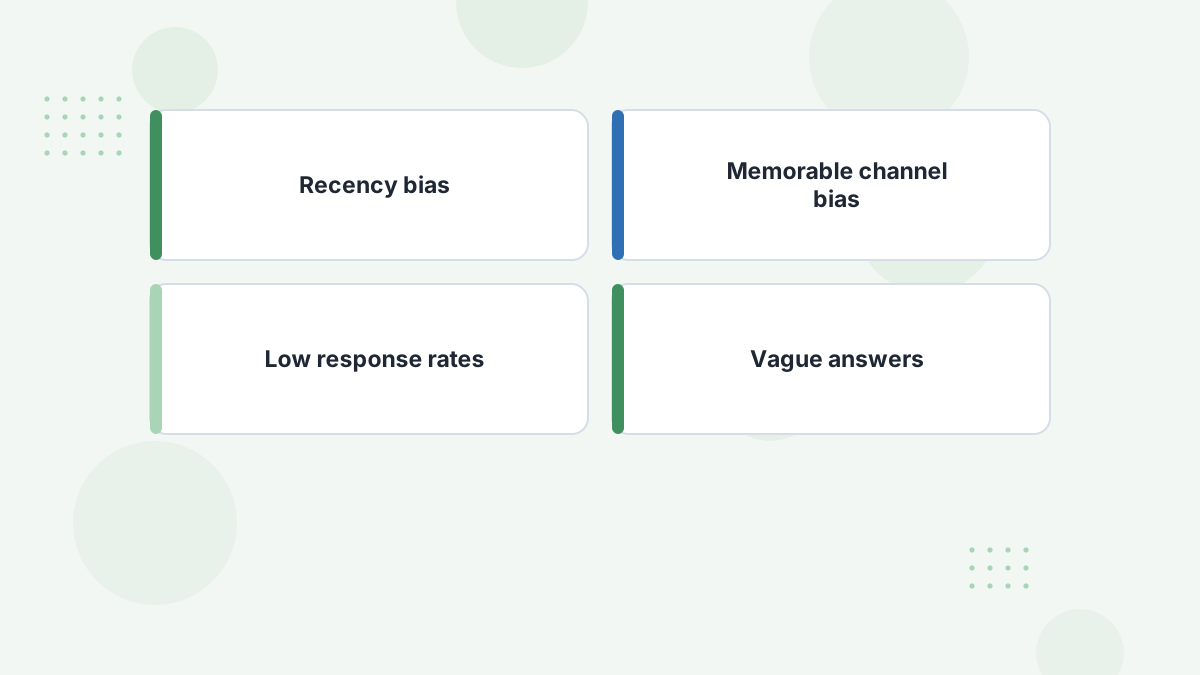
- Recency: people often name the last thing they saw.
- Memorability: distinctive channels get over-reported; search and retargeting get under-reported.
- Response rate: those who answer may differ from those who don't.
Treat survey results as directional evidence, not precise measurement.
Combining Surveys With Tracking
The most useful view puts both side by side. If tracking credits Google branded search heavily while surveys say "podcast", the podcast is likely creating demand that search captures.
Use surveys to inform where you test spend, and attribution to optimize within channels. See multi-touch attribution and incrementality testing.
Self-Reported Attribution FAQs
What is a post-purchase survey?
A short question after checkout asking how the customer heard about you.
Is self-reported attribution accurate?
It's directional and subject to memory biases, but reveals channels tracking misses.
Should it replace tracking?
No. Use both; they answer different questions.
What response rate is typical?
It varies widely by placement and audience; keep the question short and optional.
See the Tracked Side of Every Journey
Book a Hyros demo to pair your survey insights with accurate ad attribution.
Book a Hyros Demo